Saturday, November 18, 2006

Going Dutch

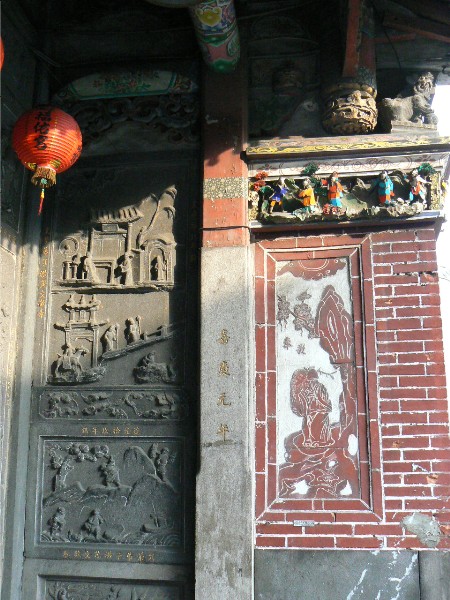
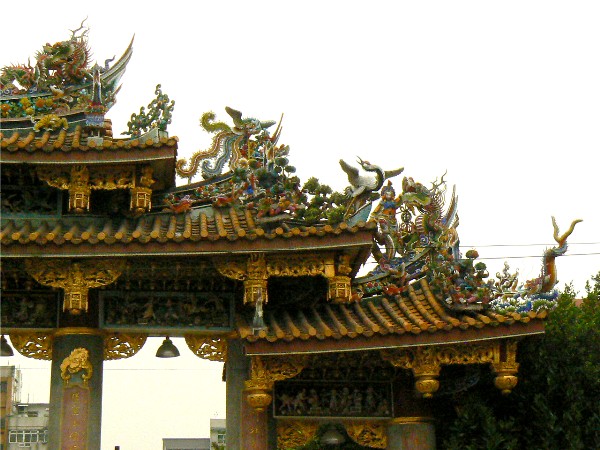
Went today to the place where Taiwan's main river mouths to the sea. Like the river the town is called Danshui, or is that Danshuei, or even Tamsui? All of the above: you see, there are three official dialects so three official ways of pronouncing every place name... and don't even ask me about the further havoc wreaked by two systems of romanization on top of that! No place I've been has the same name in Lonely Planet, my tourist map and the subway system. (The subway stop nearest Academia Sinica is spelled Kunyan or Kunyang on maps, but the voice announcement is for something more like Hwenyong.) The picture above is of the gate to what at least some people call Fuyou Temple, dedicated in 1796 to Matsu, goddess and protectress of those at sea.

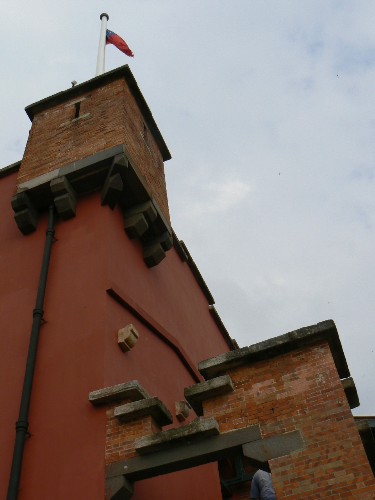
The oldest building in Taiwan is in Danshui. It's not terribly old, and was built neither by Formosan Aborigines nor Chinese settlers. It's called Fort San Domingo, established in 1629 by the Spanish. The original wooden edifice was burnt down by Aborigines and its stone replacement was soon lost to the Dutch, who renamed it after Anthony Van Diemen (after whom Van Diemen's Land - Tasmania - was named, too). The present edifice dates to 1642. For two centuries controlled by Chinese authorities, the fort in 1868 became home to the British Consulate, only to get closed down by the occupying Japanese during WW2, passed on after the war to Australians for safekeeping, until they recognized the PRC... Lots of history here, more than just a few centuries can stably contain.

With aboriginal populations, European explorers and settlers from a mainland Taiwan seems a sort of sibling to 'merca and Austrairlia. No nation had a clear and uncontroversial beginning, certainly not this crop. In Taiwan you have dozens of indigenous peoples who arrived in several waves. Settlers from different and mutually unsympathetic parts of China (hence the dialects). Portuguese, Spaniards, Dutch, British, 50 years as a Japanese colony, the KMT with the National Palace Museum in their hand luggage... Matsu, how have you kept this ship afloat?

Friday, November 17, 2006

101%

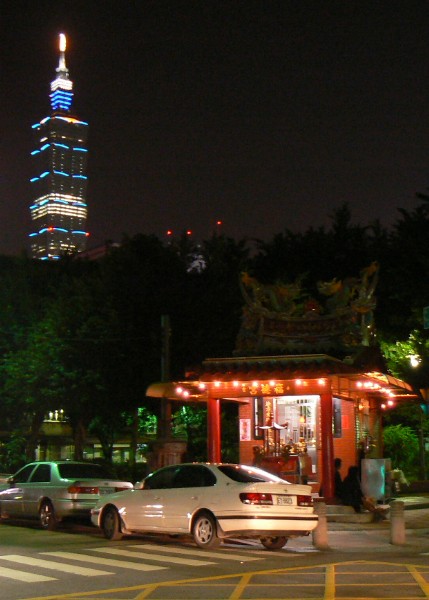
Here together are the two faces of Taiwan I keep seeing. The hyper-modernity of TAIPEI 101, at 508m the tallest building in the world (for another 2 years), and the popular Taoism on every corner. If anyone still thinks that capitalist and religious fervor are mutually exclusive, come to Taiwan. Both are booming!

The base of TAIPEI 101 (the tower is shaped like a bamboo shoot garlanded with traditional ribbons) is a vast shopping center. It's taller by a factor of two or three than any other building in Taipei - only the mountains which surround the city on three sides are as high - so the view is like that from an airplane, suspended in mid-air...

This world-class building (we're told) is a product of Technology, Art, Industry, People, Environment and Identity, the very six factors that have created the TAIPEI of today. "101" not only reminds us of the zeros and ones in electronic technology but represents the surpassing of the 100% perfection mark as well.

This morning one of our symposium hosts took me and a scholar from the Chinese mainland to the top of TAIPEI 101 (89 floors in 38 effortless seconds, world's fastest elevator!), to the huge Chiang Kai-Shek Memorial (where you can see Chiang Kai-Shek's cars!), and then to lunch. I'm not sure what this itinerary communicated about the two Chinas, although someone told me later that the Chiang Kai-Shek Memorial is a place all Mainland tourists go.

Only at lunch did the PRC scholar and I realize we had a language in common - Japanese - but this made things more rather than less awkward, as we had a perfect triangle of languages. The host spoke German to me and Mandarin to the PRC scholar, while the PRC guy and I spoke Japanese. Every time a conversation along one of the axes of the triangle got interesting it faltered, self-conscious about the person being excluded.

I suspect that this kind of awkwardness is standard fare for Taiwanese, China but not China, and increasingly overshadowed by an ever worldlier PRC. (Global capitalism and local religious traditions have this in common: they're untouched by the China question.) 101% may not be enough!

Thursday, November 16, 2006

Breakthrough

Our symposium went well. At least I think it did. I wouldn't know, actually! There were ten papers, mine the first. The second was delivered by a German - but in Mandarin. And so were all the other papers, and all subsequent discussion was in Mandarin, too. Were translations, summaries, an interpreter, anything provided for me? Nooo.

But that doesn't mean I didn't have fun. Since the topic of the symposium was the utility of concepts from the theory of religion for the study of Chinese religion, there were many names and words I recognized (though rather more from Protestant theology than I expected). But I've no idea, really, what people were on about. Like a detective who's deaf to all but loanwords, I came up with some pretty out-there hypotheses about what people's papers were about. (Try it yourself: tell a story that can absorb - in this order: absolutes Nichts ... F: formless self; A: all mankind; S: suprahistorical ... dimension ... medium ... absolute Vermittlung ... phänomenologische Bedeutung ... Karl Barth ... metanoesis ... abstract equation ... samvrthu-satya ... paramartha-satya ... repentance ... priority ... superiority ... Ding an sich.)

With that caveat, let me say that I think it was a very interesting symposium! Some things I learned were that religious studies in the US is miles ahead of other places, and that the question "is Confucianism a religion?" still matters, though I didn't get just why. A few people seemed to like my suggestion that Chinese religion provided a good place for inquiring about the relationship of philosophy and ritual in religion, especially in pursuing the problem of good. More might by the time the paper gets translated into Chinese (!) for the publication.

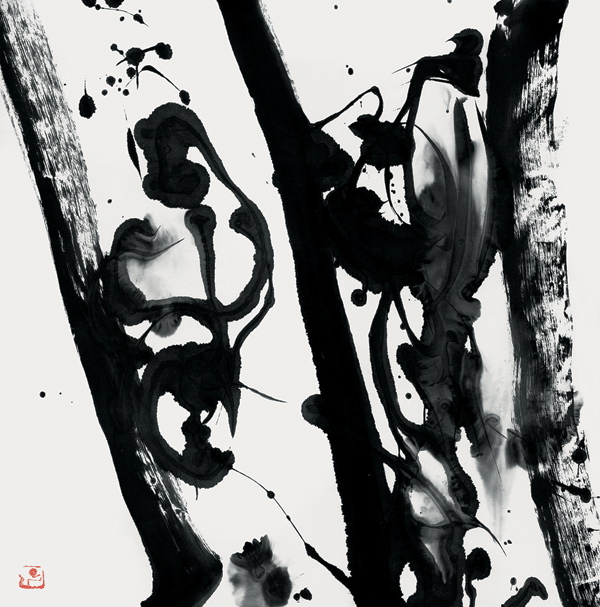
The wonderful calligraphy at right (the character is ) has nothing to do with the conference. Except that it's by a Buddhist autodidact in mainland China named Yi-Liao to whose work I was introduced this morning by the American friend who got me invited here. It's exciting stuff, often ravishingly beautiful: conceptual art coming out of calligraphy traditions and leavened by Ch'an/Zen ideas about temporality and words. There's much more. (It's a big file but worth it; the characters are printed below each picture.)

Wednesday, November 15, 2006

Jade cabbage

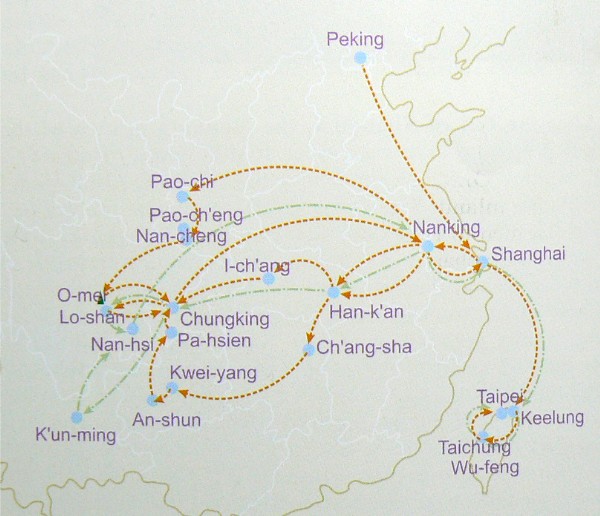
This is the famed jade cabbage (Ch'ing Dynasty), one of the most beloved of the treasures in the National Palace Museum. Taipei's undisputed "must-see," this huge museum is the cream of the collection of the Chinese emperors, celebrated as the greatest collection of Chinese art anywhere. (It's also amazingly well- traveled. As things fell apart in the 1920s, 30s and 40s, the collection - in nearly 20,000 crates - was shipped all over China. Eventually the most precious objects were sent to Taiwan to protect them from Mao and his thugs, where they've been carefully recatalogued, rehoused, and await the reunification of China. The map below shows the movements of the Palace collection, and - in green - other treasures from a museum started in Nanking in 1933.) Just between you and me, I was a bit under- whelmed. Conditions were perhaps inauspicious - the place was overflowing with tour groups (many Japanese), the emperors seem to have collected little religious art, and the newly refurbished wing which will show paintings and calligraphy was closed. But the epiphany I was hoping for never came. With the exception of a few scroll paintings and the falanges on some Shang bronzes, Chinese art has never really stirred me (except at the Royal Ontario Museum in Toronto, whose collection gave me the impression of finally "getting it"). I thought the National Palace Museum would change all that. But the piece I liked best turned out to have been made in Japan. Oops.

What I'll remember from today (boor that I am) is more likely to be the 3-D movie - they gave us cardboard glasses! - in the Shung Ye Museum of Formosan Aborigines. Video game-like animation introduced the cosmogony of one of Taiwan's indigenous (Austronesian) communities, leading from a familiar sci-fi scene of planets whirling through space to the shooting out of the sky of one of the two suns which were making life on earth unbearable by an Aboriginal huntsman. (It becomes the moon.) Then we got to meet a young man who'd heard about a giant boar whom he decided to devote his life to killing. When he thought he'd finally found the boar it was a Dutchman in funny clothes he found instead. The Dutchman dropped his gun as he ran away, and our hero picked it up and ran to return it to him, arriving on the coast just in time to see a huge naval battle between the Dutch and the Spaniards. Terrified he headed back into the woods but somehow ended up running through a time tunnel of 500 years of Taiwanese history (it takes ten seconds) and found himself in a baseball diamond, holding not the white man's gun but a baseball bat. He seems to be both pitcher and hitter, and the ball he hits is more than a home run - it flies out, blazing, into space, past planets, along the rings of Saturn, and on and on into the familiar sci-fi scenery. The spirit hunters of the Aborigines live on in outer space. Weird.

But maybe this is the kind of infomercial you need to make to compete with the world-historical claims of the Chinese (who never appear in this film!), making common cause against the great western boar. Pondering which enigma I went to a Starbucks (the belly of the beast!) and worked on my presentation for tomorrow.

Tuesday, November 14, 2006

Religious Taipei

A first (very) full day in Taipei, a city overflowing with religious energies.

In the morning, an American friend took me on a hike up a mountain behind the Academia Sinica. Australia is many things, but mountainous it is not, and it was almost exciting to be going up, up, up through semitropical foliage as giant black-blue butterflies fluttered by... The sky was greyish-white, but that was probably for the best, as it was already plenty humid. Only the colors of my photos suffered some... The steep steps of the path took us past several little Taoist temples.

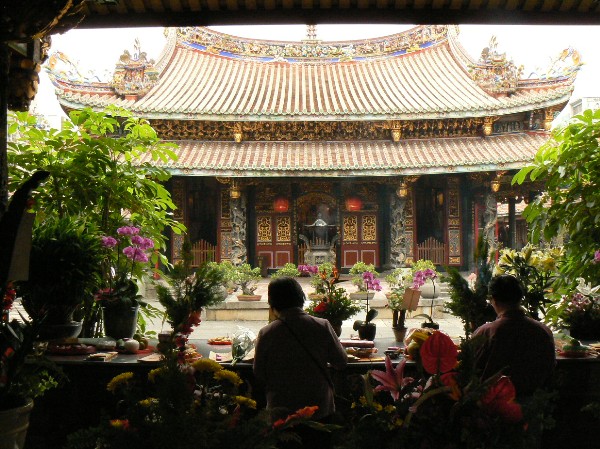
In the afternoon, two Taiwanese scholars took me through temples in Taipei: one Taoist (Pao -An), one Confucian, one Buddhist (Longshan) - if only it were that simple! The level of ornamentation varies - from the sobriety of the Confucian temple to an inspired excess in the Taoist -
but all had the bowed, almost sagging roofline you see in the Pao-An (Taoist) temple above. There were definitely differences in atmosphere, but more overlap in objects of veneration than you'd expect if you thought religious traditions are jealously exclusivist instead of, say, entrepreneurially inclusivist. The celestial goddess Matsu, central to Taiwanese Taoist devotion, was also venerated in the back of the Long Shan Buddhist temple; Buddhists believe that Matsu was a follower of the Buddha. This was less surprising to me than the large crowd of lay worshippers singing a sutra to Kuanyin (Avalokitesvara). I'm familiar only with Japanese Buddhism, where the laity keep clear of temples until a funeral forces them to go. Buddhism here is alive and kicking!

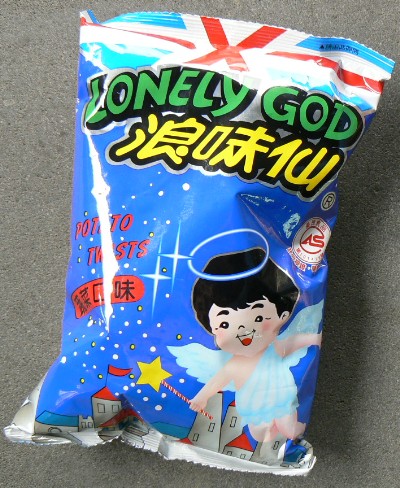
And then, after a dinner of the most tender and delicious dumplings I've ever had, we walked around a central neighborhood where a big Catholic church, the Chinese Muslim mosque, and a characteristically sci-fi Mormon temple were pointed out to me. Perhaps I'd have have been shown very different things were I not a religious studies person, but I suspect any visitor would be struck by the religious vigor here - at latest when looking for snacks at the nearest convenience store...! (I'm not quite sure if the potato twists made the lonely god into a happy angel or what...) The variety and fervor of religious devotions here give some idea of what the communists rooted out (or tried to) on the mainland. Might it return one day?

Monday, November 13, 2006

Over the red center

Yay, the Activities Center of the Academia Sinica has wifi! I'll tell you more about Taipei tomorrow when I know more, and when today's oneiric dusk taxi ride from the airport and the charming walk through night markets and temples have sunk in a bit.

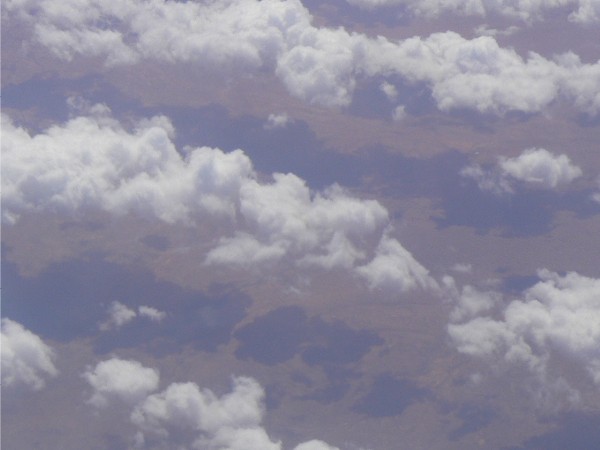
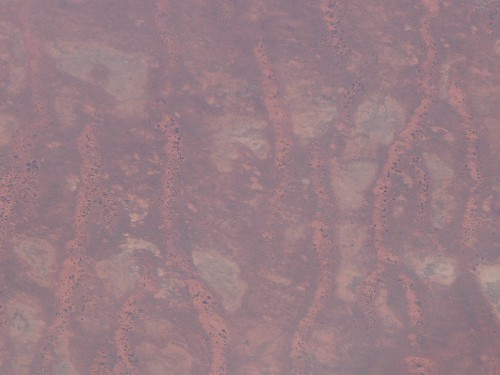
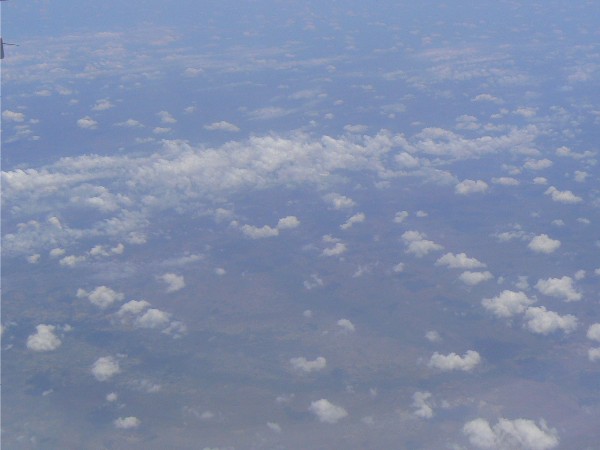
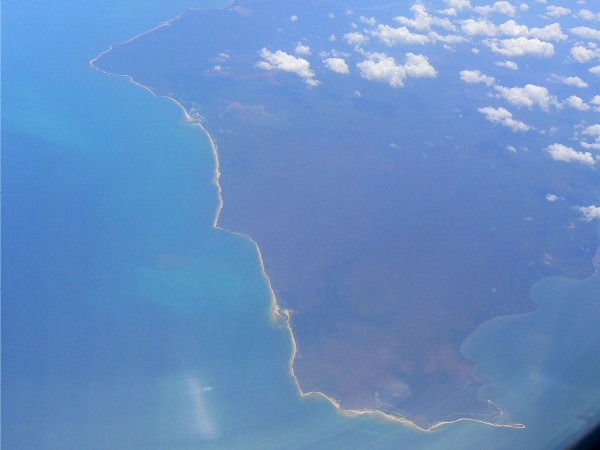
What I need to share with you is a priceless but unexpected perk of flying to Taipei from Melbourne. It's not just that I've learned that long-haul south-north flights aren't nearly as exhausing as east-west ones (can you believe this is my first such flight, after scores of flights east and west?). It's that I got to spend four and a half hours mesmerized as we flew over the "red center" of Australia: up over Broken Hill, east of Alice Spring, then over Katherine, past Kakadu and Darwin, over Melville Island and out into open waters. (It didn't hurt that I'm finally reading Patrick White's Voss, the classic novel of the white man's doomed struggle to conquer the land!) As discussed way back when, Australia's cities hug the coastlines, unsettled by their wild heartland. Facing the seas and distant continents, they have their back to their own. Much of the land we flew over is desert with scarcely any rivers and narry a bush or tree, and patterned in ways new to me -- long streaks, broad ripples, and occasional epidemics of dried up waterholes. It all looked a lot like colors and patterns I've seen in Aboriginal painting. For most of the stretch there were no clouds (although it was raining in Melbourne as we left!). As we got near the north coast, though, clouds gathered and ... am I imagining things or did they make the shape of a giant crocodile over Kakadu National Park? When I get back to Australia, I've got to turn inward. Maybe I'll take the train across the country! In fact I've got my eye on a rail pass which will let me do Melbourne- Perth (on the Indian Ocean) in early December, before the summer holidays begin, and Melbourne- Alice Springs- Darwin in May, when the weather's more manageable, and I can face Uluru. And at some point, since it's a railpass, Adelaide- Sydney, over Broken Hill (Ned Kelly territory). Of course what one really should do, I suppose, is bushwalk, indeed go bush walkabout! (By the way, in case you didn't know, you can click on any of these pictures to see a larger, clearer image.)

Sunday, November 12, 2006

Off to Taiwan

I'm off tomorrow for a week in Taiwan, a new frontier! It's been a while since I visited a country where I know nobody, not to mention the language. That's a slight exaggeration, as there's one person I know there, and I'll recognize a good many characters from Japanese (and, I'm told, the older people I meet are more likely to speak Japanese than English). But still...

Perhaps it seems so exotic and distant because it's not a place I've always sort of meant to get around one day to make sure to visit since everyone should see it before they die. Kind of like Australia in that respect, and look at what fun I'm having here! (So much, indeed, that part of me is saying "do I really have to go?") Once I get on the plane tomorrow I'll have twelve hours to realize I'm really excited and a bit terrified at the prospect of seeing not only a new world but the world from a new point of view. Relativized yet again!

I'll try to find internet cafés and keep this up to date, but will be back on line at latest on the 21st.

Saturday, November 11, 2006

Good onya!

Sorry for the brief hiatus, I was off in the country. Life in rural metropolis Shepparton is surprisingly comfortable, but my sister's internet connection is from the stone age. Here's the dustcloud following a truck driving parallel to our train. The fields which should be lush with green - remember that if this were the northern hemisphere it would be early May! - are so dessicated even weeds won't grow. Latest word is that this is not a hundred-year drought after all, but a thousand-year one!

My mind is reeling (happily!) at two pieces of earth-shattering news:

One is the seismic shift in US politics. If you ask me, the Congress should take on presidential signing statements right away. Hearings on corruption and incompetence and mendacity must come, but they will be nasty and take forever, there being so much to uncover. Before everyone remembers that they have no confidence in any of the players or institutions in question, the roots of the imperial(istic) executive need to be decisively cut! A restoration of confidence in the parliamentary process would do wonders for American democracy.

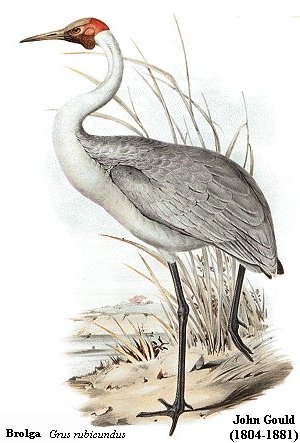
The other news: my younger nephew has become a biped! When first I heard this on Monday I felt as if a new dimension had been added to the world. He seems entirely unfazed by it, and walks about as if it were nothing. On Thursday we went to Kyabram Fauna Park, a community-led zoo for Australian animals a few miles from Shepp, and there was no question that after eleven months close to the ground in company with echidnas, possums and dingoes, he is now decisively on the team with emus, wallabies and brolga.

If Herder's to be believed (actually Herder's far too schwärmerisch to be simply believed!), the switch from horizontal to vertical brings the eclipse of smell by sight and a sense of the reality of the distant, the discovery of critical separation from the world and the unfolding of reason for understanding it better. This is indeed earth-shattering and must, come to think of it, produce some deep experience of loss of a full-body intimacy with the earth, and, for that matter, with your whole body, but what I'm wondering is: What will replace the attempted ingestion of whatever he finds on the ground as my nephew's main experience of communion with the world?

Tuesday, November 07, 2006

Hope!

I've been following the results from the mid-term elections breathless on nytimes.com (because they seemed slowest to call a race: after the trauma of the 2004 I'm not keen to get my heart broken again), restlessly hitting "refresh" every five or ten minutes while desultorily trying to read. (Fat chance!) At 3:36pm our time the number of House seats gained by Democrats jumped from 14 to 16, and I couldn't stop myself from jumping for joy, hands in the air! It isn't over until it's over, of course. And it would take years to dig out from under all the Bushies's shit even if there weren't more to come and one had more confidence in the Democrats. But... this feels like the first light of a distant dawn!!

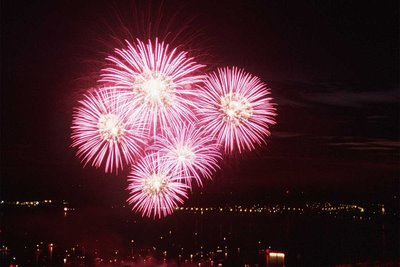
(The first picture's from bigfoto.com, but the second's mine.)

Monday, November 06, 2006

Big Cup

It's Melbourne Cup Day, the day of "the race that stops a nation." It's almost a holiday - schools in Victoria apparently have the choice of canceling classes!

Not knowing or caring much about horse racing (despite growing up next to the racetrack at Del Mar, "where the surf meets the turf") and uninterested in dressing up, I note that footage of the 1893 Melbourne Cup is the oldest surviving film anywhere.

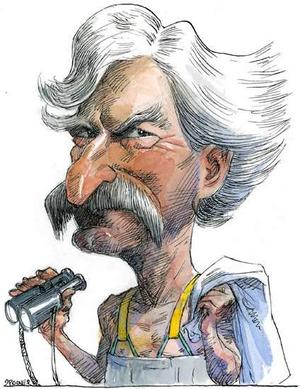
The Melbourne Cup was already the most important day of the year in the 19th century. Here's a tribute from Mark Twain in 1895 (from an excerpt in today's Age, source also of the picture at right): The Melbourne Cup is the Australasian National Day. It would be difficult to overstate its importance. It overshadows all other holidays and specialized days of whatever sort in that congeries of colonies. Overshadows them? I might almost say it blots them out. Each of them gets attention, but not everybody's; each of them evokes interest, but not everybody's; each of them rouses enthusiasm, but not everybody's; in each case a part of the attention, interest, and enthusiasm is a matter of habit and custom, and another part of it is official and perfunctory. Cup Day, and Cup Day only, commands an attention, an interest, and an enthusiasm which are universal and spontaneous, not perfunctory. Cup Day is supreme - it has no rival. I can call to mind no specialized annual day, in any country, which can be named by that large name Supreme. I can call to mind no specialized annual day, in any country, whose approach fires the whole land with a conflagration of conversation and preparation and anticipation and jubilation. No day save this one; but this one does it.

Not everyone is a racing fan, as a delightfully peevish piece by Jim Schembri, also in today's Age, attests: [H]ow did cup day come to be emblematic of what an egalitarian utopia Australia is supposed to be? "People's Day" they call it, all because bods who don't usually go to the races turn up by the rented mini-bus load to eat cold chicken and drink cheap champagne off the grass. The hard truth is that the Melbourne Cup shows just how deeply in love Australian society is with the English class system. It's the most vulgar display of the social pecking order there is with its VIP parties, its nobody celebrities, its corporate marquees, its members-only bar, its exclusive invite lists and its car park and public lawn where the plebs can tell each other what a classless wonderland they live in as they get soaked in the rain. If anything, the Melbourne Cup proves just how totally uninterested Australia is in ever cutting its ties with Mother England.

Of course I suppose it is nice to have all this to distract me and save my fingernails from being gnawed to the bone with worry over the US midterm elections.

Sunday, November 05, 2006

No more boomerang

Here's a well-known poem by Oodgeroo Noonnuccal (1920-1993), an Aboriginal poet.


NO MORE BOOMERANG


No more boomerang
No more spear;

Now all civilised --
Colour bar and beer.

No more corroboree,
Gay dance and din.
Now we got movies,
And pay to go in.

No more sharing
What the hunter brings.
Now we work for money,
Then pay it back for things.

Now we track bosses
To catch a few bob,
Now we go walkabout
On bus to the job.

One time naked,
Who never knew shame;
Now we put clothes on
To hide whatsaname.

No more gunya,
Now bungalow,
Paid by hire purchase
In twenty year or so.

Lay down the stone axe,
Take up the steel,
And work like a nigger
For a white man meal.

No more firesticks
That made the whites scoff.
Now all electric,
And no better off.

Bunyip he finish,
Now got instead
White fella Bunyip,
Call him Red.

Abstract picture now --
What they coming at?
Cripes, in our caves we
Did better than that.

Black hunted wallaby,
White hunt dollar;
White fella witchdoctor
Wear dog-collar.

No more message-stick;
Lubras and lads.
Got television now,
Mostly ads.

Lay down the woomera,
Lay down the waddy.
Now we got atom-bomb,
End everybody.

From My People: A Kath Walker Collection (Jacaranda Press, 1970), 32-3

Australia's Aborigines were granted the right to vote and be counted in the census only 3 years before that, in 1967.

...

Where are the Melburnians?

After nearly two months' worth of pictures you may be wondering where all the Melburnians are. There are 3.5 million of them, after all! It's true, I tend not to take pictures of people (I don't want their souls on my hands!), though a few snuck into the picture I posted a few days ago. So here are some of the thousands of demonstrators in yesterday's Walk Against Warming. They filled most of Swanston Street, the main thoroughfare in the CBD (downtown), and filed along in silence - no chants, no songs! A pretty good turnout, especially considering it was Derby Day, the opening day of the Carnival at the Flemington Racetrack leading up to Tuesday's Melbourne Cup. A record 129,089 people dressed up to attend the glamorous event, and a few hours after the demonstrators were gone (I was watching the film "Phar Lap" at ACMI to try to understand how the races could mean so much to a people) Swanston Street was awash with people in the splashy spring formal fashions (think Ascot) associated with the races - even teenagers! Horses make sense to me, but this?

Friday, November 03, 2006

Prophetic


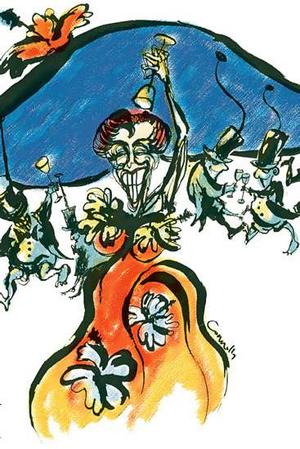
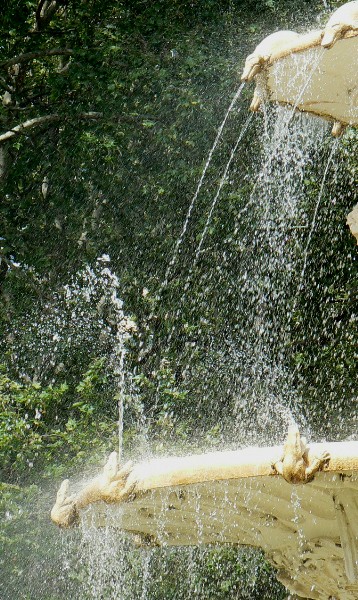
The drought's come to Melbourne: all the city's fountains have been shut off! That includes the rather grandly silly one in front of the Royal Exhibition Building. Here's the scene just a few weeks ago as a platoon of platypi kept malevolent mini-crocs from entering a pool in which little boys representing commerce, industry, science and the arts were at play.

Who's to stop the crocs now?

Thursday, November 02, 2006

Inga vs. Kate

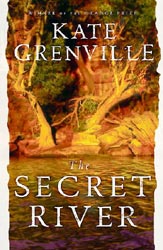
An interesting row has broken out between Inga Clendinnen, a distinguished historian, and the author Kate Grenville, whose book The Secret River was shortlisted for this year's Man Booker Prize. (I read Secret River last month, and found it moving and profound.)

The Secret River is a fiction of first contact, based on research in Grenville's family history - her account of researching the book is a fascinating read, too. It's the story of a London boatsman sent to New South Wales for theft, whose son and pregnant wife get to come along, too. Ferrying goods up an apparently undeveloped river north of Sydney the protagonist Thornhill spots a flat verdant area between loops of the river, and eventually settles his family there. Of course it was not uninhabited, and conflict with the Aborigines ensues.

The other settlers along the river run the gamut from friendly to the Aborigines to murderous. Thornhill tries to mind his own business, which of course is more easily said than done. The brutality of one of his fellow settlers provokes Aboriginal reprisals - and all the while the Thornhills are sitting on land the local Aborigenes relied on for food. Bad things happen. But the Thornhills survive and thrive. (All his children survive, a minor miracle for the early 19th century.) His wife Sal gives up her dream of returning to London - most of her children were born in this land, she says - and enjoys life as a wealthy countrywoman. Thornhill remains haunted by the cliffs across the river, which he can't stop scanning for Aborigenes.

This summary doesn't do the book justice - it's well worth reading. It's a moving and well-written book, working slowly but powerfully to the tragic climax and in some ways even more unnerving continuation of the story. It makes the challenges and compromises of ordinary people in the first decades of European settlement comprehensible and moving, acknowledging the crimes which attended the nation's founding.

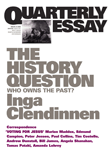
Or so I thought until I read Inga Clendinnen's "The History Question: Who Owns the Past?" - a lengthy essay (in a wonderful publication called Quarterly Essay, which each season publishes one long essay on a current topic and a dozen responses to the last one) on contemporary discussions about history, especially Australian history. It's mainly provoked by Prime Minister John Howard's critique of the "black armband version" of Australian history and call for an affirming national narrative which will communicate "core Australian values" to future generations, especially immigrants. Attacking his view is like shooting fish in a barrel, so Clendinnen's discussion ranges broadly to include not only the "Stolen Generations" but Waltzing Matilda (extract available online) and ANZAC Day.
And Grenville's Secret River. In a television interview Grenville had rather unwisely claimed that in novels like her own novelists were doing a new kind of history, indeed a work of history historians could not match, since it lets the reader really enter into the past. Clendinnen, who's done important work on past cultures and events like the Aztecs and the Holocaust, will have none of this. The past is a foreign country, our empathy is more likely to blind us to it than to give us entry. One of the things historians do is protect the past from contemporary appropriations.

Here's Clendinnen's retort to Grenville's claim to have written more authentic history because she not only read early colonial sources but subjected herself to a stormy passage across the bay and spent a night in the bush:

Some engaged reading, some preliminary flexing of the imagination, a run, a vault, and presto! you are there. How do you know you are are now in the Past? Because while the place might look exotic, you understand it so much better than the complicated place in which you usually live. In the novelist’s “past” everyone behaves delightfully, “in character”, and everyone submits to the plot. The novelist might surprise her readers. She will never surprise herself.

I can't wait for the responses!

Delicate

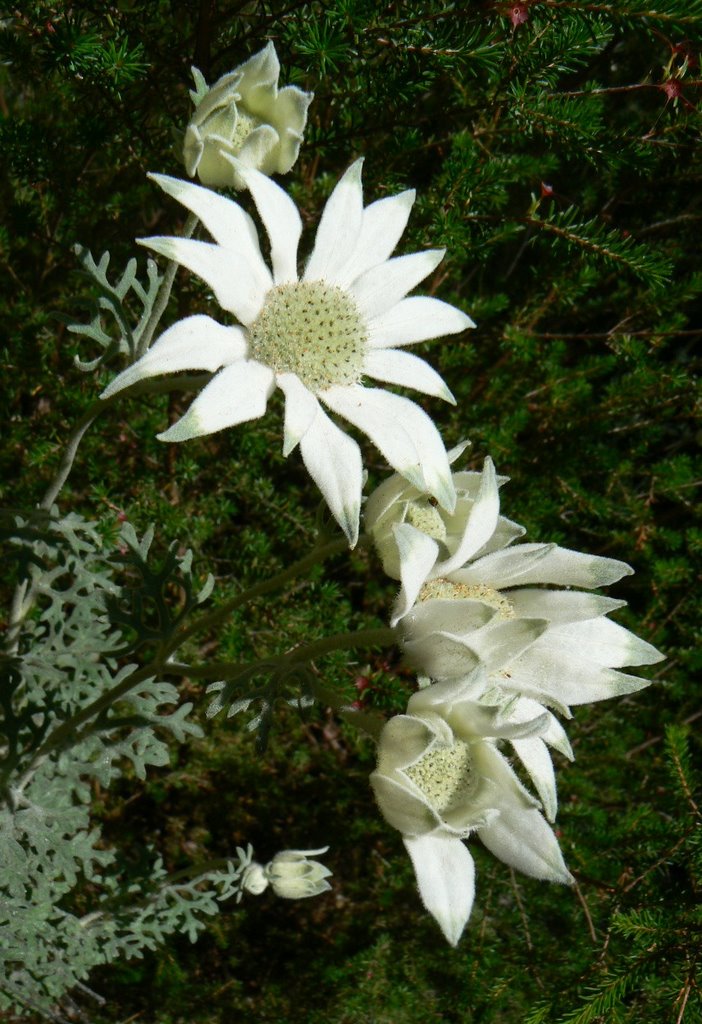
Here's another local flower, about 3" in diameter with thin soft furry petals you can hardly feel when you touch them.

Monday, October 30, 2006

Taipei personality

Today I'm sending off my paper for a symposium on the theory of religion as a resource for the study of Chinese religion to be held in a few weeks in Taiwan. As I know next to nothing about Chinese religion (and won't be learning much, as all the other papers but one will be delivered in Mandarin!), I'll be talking about the theory of religion.

In fact it will be my first chance to try out some of the key ideas from my book project on an unsuspecting world - specifically that modern western theory of religion has focused on problems of evil and meaninglessness, overlooking the continuing experience of the good. The new idea in this paper is that understanding religion as responding to evil makes ritual incomprehensible - it's just magical busywork meant to take our minds off things. If we see religion as a response to a world "ethically irrational" also in good - grace, serendipity, harmony, order, fecundity - things like ritual make more sense, since the goods of the world are more like an invitation to dance than a philosophical problem or existential challenge.

Some ritual surely works to anesthetize, and some to placate fears of dangerous powers. But there's also ritual like the dancing in Australian Aboriginal traditions, which someone has eloquently described as being part of the earth's own movement.

Sunday, October 29, 2006

Exhibition

The Royal Exhibition Building, one of Melbourne's 19th-century marvels, was open to the public yester- day. Its dome is apparently inspired by Florence's. I discovered what must be the inspiration for "The Adventures of Priscilla, Queen of the Desert" - that Hermes at top right is a little over the top, no?

Tallis

In church today we got to sing the hymn melody by Thomas Tallis around which Ralph Vaughan Williams wove his exquisite if melancholy "Fantasia on a Theme by Thomas Tallis" (New English Hymnal 373). I'd never sung it before. I felt Vaughan Williams' achingly beautiful orchestration welling up just outside the church as we sang...
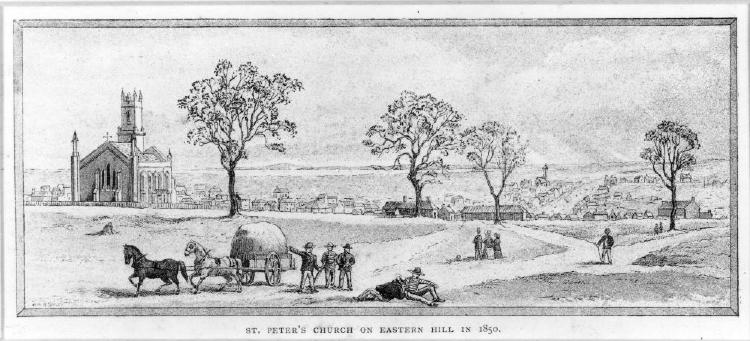
I haven't told you much about St. Peters Eastern Hill, the church I've been attending. (My housemates don't know: they figured that as a philosopher of religion I must have seen through the pretensions of all religions!) It has a long history, apparently very engagingly described in From Tories at Prayer to Socialists at Mass by Colin Holden, a book I've taken out of the library but haven't yet read. Next year will be its 160th anniversary.

Its environs no longer look as they did in the 1850 print above; on Eastern Hill it's been joined by the Catholic Cathedral, a synagogue, a Lutheran church - and Parliament. Old prints on the wall of the parish hall show an unadorned indeed stark Protestant-looking hall, but it has for a long time now been an Anglo-Catholic church, with that perhaps surprising combination of high liturgy and progressive theology characteristic of that movement. The sanctuary is gilt, six tall candles sit atop the altar at the end of the choir, the stations of the cross adorn the walls, and a Lady Chapel is off to the side, with a replica of the reconstructed statue of Our Lady of Walsingham in England. Just this year an icon panel was installed in the rafters - though that's more Orthodox than Catholic.

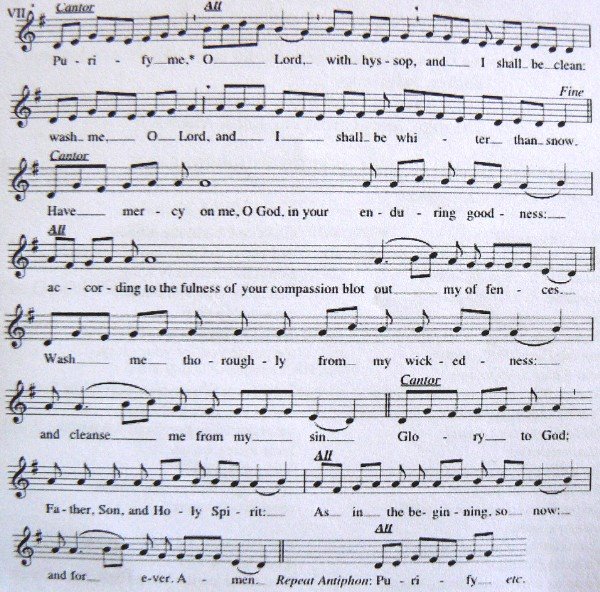
High Mass (as it's called, feel the Sydney Puritans cringe) has the congregation on its knees a lot, as when the choir sings the "Kyrie" and "Sanctus" from mass settings by Palestrina, Vittoria, Haydn or Mozart. (We stand for the "Gloria," and sing a setting of the Nicene Creed, so don't get to hear the "Credo.") But we start - at least in this season - like monastics, singing at a brisk clip the following lovely Gregorian melody
as the priest sprinkles the congregation with holy water. (Feel the Sydney Puritan's blood boil.)

Which reminds me of a time, years ago, when an undergraduate I knew at Princeton was baptized a Catholic. A fellow graduate student friend of mine, an atheist, came to the evening mass in the Princeton University Chapel. The priest sprinkled us, and she was splashed - and freaked out by it. I don't suppose I helped much by remarking that she wasn't going to hell after all...

Saturday, October 28, 2006

The Melbourne Model

A bundle of my mail from New York arrived yesterday - it had been sent in September by courier to Shepparton and returned for some reason (!), and then sent again and once again returned (!!), but has now safely arrived at the Philosophy Department. It includes a letter from the University of Melbourne dated 2 August (!!!) offering me status as an Honorary Lecturer within the Faculty of Arts, associated with the Department of Philosophy.

Honored, I'm sure! I thought I was just a somewhat shady Visitor. Whom can I lecture?

Melbourne Uni is actually about to embark on the biggest curricular change in its history, a sort of half-way accommodation with the American model and the Bologna Process making its way through the EU universities. Instead of applying into 3-year degrees in one of a huge number of subjects, effectively choosing their careers as they enter university, students starting in 2008 will enter one of six broader fields - and will get a "liberal arts" education, taking many courses outside that field. If they want, they can then stay on for a more specialized 2-year masters degree; they're assured a place if they've performed well.

I've heard it described lots of ways. (I dare you to brave the lame music and twangy students in their video for future students.) It will be good for students, I'm assured, because it's a more broad-based education, and allows them to make later and more informed choices about careers; it will also allow them to change field as they enter a masters, very difficult under the present system. It will be good for the humanities, I'm told, as more students will be taking courses in the humanities to satisfy the outside-your-major distribution requirement. It will be good for faculty, I'm let know, as they'll be able to teach more upper-level courses - and there'll be more of them.

But not everyone is enthusiastic. How will the broad undergraduate majors be structured with intellectual integrity? Some see the Melbourne Model as a grab for more tuition money for more faculty - students interested in specializing will now have to spend five years getting a general undergraduate degree and a masters, instead of four in a more specialized field culminating in a demanding honors year of research. (Under the present system, strong students are encouraged after their first year to aim for the honors year, effectively turning their remaining 2 + 1 years into a higher level course.)

I'm sure there's much of it I haven't yet understood, but it's exciting to be around as such big changes are bruited - though it might have been more exciting still half a year ago, before the Model was finalized and approved.

Needless to say this brings back endless discussions about curriculum, liberal arts, and the like back home! As you know, I think a liberal arts education is the way to go, not just because it anchors you in a more complete awareness and understanding of the world's richness and complexity (the traditional argument) but because most of the preprofessional stuff we teach will be obselete in a few years. Our students, at least in the US, are looking forward to switching career twice before they retire (if they can afford to retire, but that's another issue), - and not always because they want to.

So by all means give them a good foundation for redefining themselves and learning to learn new things, and some of the wisdom of the past for reflecting on what's happening. They'll need it.

Friday, October 27, 2006

Four seasons in one day

One thing of which Melburnians are proud is the weather - Syndeysiders have no weather, I hear, just endless sun. And no seasons, whereas Melbourne gives you all four seasons in one day, every day! ("Four seasons in one day" is a catchphrase, like "world's most livable city.") Sure enough, in the time it's taken me to write this the wet grey out the window gave way to blue sky on the horizon, then sun lit up the window frame, and now ... fades, the blue patch in the sky vanished. Dressing in this city is all about layers, many thin ones (like cross country skiing) rather than a few thicker ones, and cardigans with their ease of opening and shutting and half-opening will never go out of fashion. Happily humidity is low!

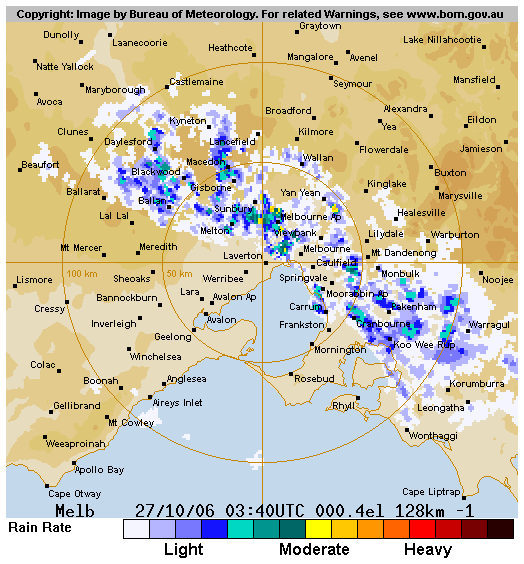
Today we've actually had what passes for precipitation in these days of drought, enough to mottle and briefly darken the ground! But the parched fields around Shepparton (north of the map as far again as Seymour), remain dry as dust. (Ah, but some of it might dribble on Shepparton, which you can see in this bigger, animated and regularly updated map.) And while I have your attention, do notice what a lovely natural harbor Melbourne boasts.

And allow me to say that, four seasons in one day notwithstanding, I am feeling great autumn withdrawal. My heart aches as friends and family describe walks in woods radiant in gold and red, and I picture buttoning up a coat, wrapping around a scarf, and thrilling at the wind's promise of colder times to come, when you'll be able even to see through the trees.

Which isn't to say, though, that I don't follow all the other residents of Melbourne to the sunny side of the road when the sun does show!