Friday, February 10, 2023

Opening salvo


In the first meeting of our intensive mini-course "What is college for? Higher education in society" we started with the familiar 1918 "Proposal for an Independent School of Social Science for Men and Women," allowing students to annotate it with questions and observations, and then zoomed out dramatically to suggest a much bigger set of questions. Groups of students were charged with reading and presenting four additional texts, each interesting in its own right but also, we promised shining light from a different angle on the problems The New School sought to address.

The first group gave a quick survey of the history of universities, a longer and more complex history than most realize. Why, where and how institutions of higher instruction and learning were established raised questions about whose the university is and whom it is accountable to. Founders, sponsors, the public, government, knowledge itself?


A second group talked about the Historically Black Colleges and Universities, raising questions of access and exclusion - and drawing attention the heroic efforts of those excluded in designing and defending their own institutions of higher learning.


A third group told about the founding of the American Association of University Professors, just a few years before - and involving many of the same thinkers as - The New School, making clear how rare it is for educators to run the show, or even to have stable positions. (The issues raised by each group resonate not only with New School woes but with growing attacks on higher education nationally and internationally.)


The final group used material from a video on the "founding mothers" of The New School (ten of the nineteen members of the 1918 Organization Committee) to help make us aware of the exclusion of women from nearly the whole history of universities, and of how the New School's legacies include the tenacity and imagination of thinkers anchored in practices and institutions besides the university.

It's a lot to process and we have only two more sessions to process it, but it was exciting to find that the compressed format actually gave us permission to think more broadly. I'm not sure I've ever approached our local and global issues with quite this wide a frame. Perhaps this was possible also because the current New School seems more unmoored from its past than ever, even as the idea of it invites all involved in it to think beyond about crucial questions of higher education's role and function in society. A good start!

Thursday, February 09, 2023

Yogic

Visiting one of the discussion sections for "After Religion" today, I was asked to say a few words about "where yoga comes from." Students had done our reading on how criticisms of the inauthenticity of contemporary yoga practices fall prey to the same essentializing moves which drive the market for neoliberal spirituality commodities. Everyone's looking for the true pure authentic original yoga, but historians of religion know no tradition is true or pure in this way, and that claims for purity and authenticity do violence to the richness and complexity of living traditions. "[I]t is not the scholar’s place to establish or verify claims about origins or authenticity," she proposed, directing us instead

to acknowledge those claims among spiritual subjects, to analyze them as religious claims, and, in the study of religion in contemporary society, to critique their relationship to the economic and social machinations of the dominant culture of consumer capitalism. (Jain, Peace Love Yoga, 64-5)

Well and good, students said. But surely the point wasn't that anything could with equal legitimacy claim to be yoga. Surely different contemporary practices and products are some of them guiltier than others of traducing an ancient tradtion! And if we don't want to let Narendra Modi claim yoga for an ahistorical and politically reactionary Hindutva, isn't he still closer to it than the fitness industrial complex? The class wanted to know: how did yoga start?

I think I found a way to preempt a default to the fallacy of origins. When Patañjali penned the Yoga Sutras, I said - nobody's sure when that was, by the way - he wasn't creating something new but rather recording practices which had proved themselves over centuries before. (Similar sorts of practices proved and would prove themselves to Buddhists, Jains, Daoists, and Islamic and Christian mystics.) He organized them into eight categories, only two of which are the postures and breathing exercised we think of as "yoga." Indeed, these two were means not ends, and means not to helping people be their fullest self in the here and now but to leaving their bodies and their very humanity behind. 

When word of yoga was brought to these shores by Swami Vivekananda in 1893 (I passed around my book from the Congress of the World's Religions, describing its importance as the first time Asian figures spoke for their traditions in the West), it was as philosophy, not physical practice. Indeed a philosophy he claimed was consonant with the monotheistic religions... Is that what you were after, I asked?

Wednesday, February 08, 2023

BNSBNR

In "After Religion" today we spent ten minutes brainstorming the difference between religion and spirituality but it was of course a trick question. After exploring the ways in which the SBNR and some who lament the decline of religion seem to agree about the difference, I reminded the class of one of the claims in our reading: 

What is often called spirituality is yet another form that religion assumes under certain historical, social, political, cultural, and economic conditions. (Andrea Jain, Peace Love Yoga: The Politics of Global Spirituality, 50)

One could quarrel with the argument but the artificial clarity of the religion/spirituality contrast faded quickly, coming to seem more like a polarity within religion than something fundamentally different from it. Maybe we were moving too quickly? A student's reflection helped me appreciate why the religion/spirituality distinction might not mean as much as it used to. "Our parents are Gen X," the student said; "they're all about being spiritual but not religious, but we..."

So maybe at least some of them are "after religion" in the sense of seeking it even in the aftermath of its purported demise. Jain's claim, a cold shower for someone thinking they had left religion behind, might even be comforting to children of the Gen X...!

Tuesday, February 07, 2023

Left leaves

In my office, memories of last semester's interrupted class...

Monday, February 06, 2023

What is college for?

My second class for the semester starts Friday. The latest fruit of my longstanding collaboration with my friend and New School history colleague J, it's something old and something new. 

With New School history, though, old and new can be hard to distinguish. This will be in a format new to us - a 1-credit intensive mini-course taught over three weekly 3-hour sessions online - but we've been trying out new formats from the start: lectures and seminars, online journals and e-books, exhibitions and podcasts. And if the subject matter - New School in the context of higher education - isn't that new, it has a new urgency at this moment of existential crisis for the university ("tumultuous and anxious times," the university ombuds says), worlds apart from the valedictory warmth of the short-lived interest around the centennial three years ago. 

We didn't actually plan to teach in this format: a standard issue seminar was the original plan, though of course team-taught. But registration for spring classes ended before last semester's strike and soul-searching, and not enough people signed up! Undaunted we proposed replacing the original course with two linked but independent intensives, each in a slighty different format. Both are called "What Is College For?" and will offer 1 credit for 10 contact hours. "Higher Education in Society" meets online over three Friday mornings. Its complement, "Making a Liberal Arts Major," will meet in person three mornings in a row over a weekend next month. Small-scale intensives like these exist in other parts of the university; we're game to experiment with their efficacy in a liberal arts context.

Thinking outside the box is of course a very New School thing to do.

Sunday, February 05, 2023

Sconce

When it appeared last week, this manifestation of a water leak under the paint on a wall of our Church of the Holy Apostles struck many of us as weirdly beautiful - a work of art! A week later it's grown...
and brought friends...

Saturday, February 04, 2023

Brrrr

Once-in-a-generation cold, though NYC's real feel low was only -28˚C.

Thursday, February 02, 2023

躺平

The new entrance to the Long Island Railroad concourse at 34th Street and Seventh Avenue has a map it took me a while to recognize. (To be fair, I first saw it from below, and took the escalator up and back down to get a fuller view.) The horizontal Manhattan is kinda cool.

Wednesday, February 01, 2023

Flurry

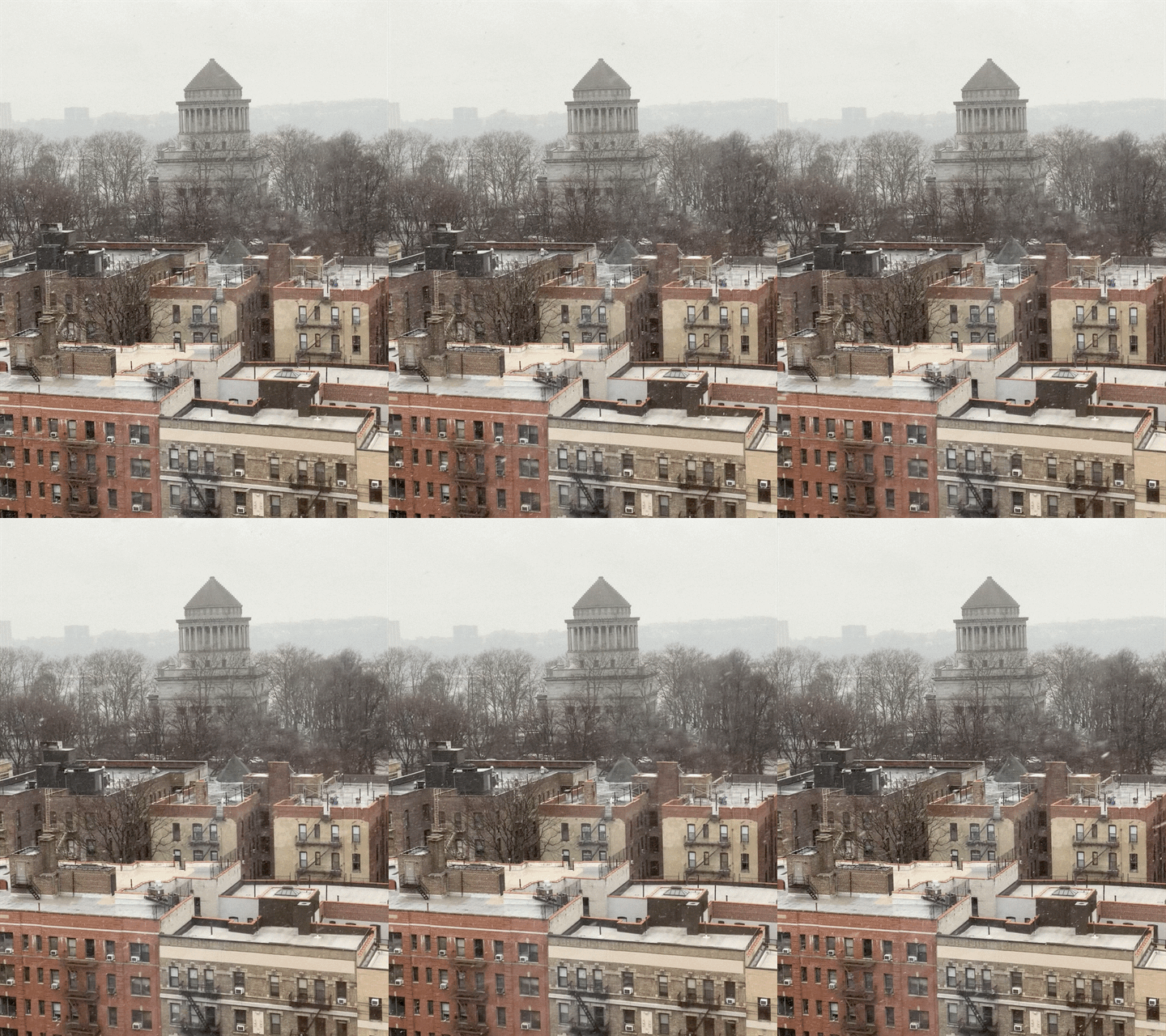
Yesterday morning there were some flurries, which I raced to take a picture of (indeed a gif!). It's been a snowless winter in New York City, and I knew it wouldn't last on the ground. 

But looking out the window this morning - behold! Mostly melted away by afternoon, but still, the most snow yet!

Tuesday, January 31, 2023

Stick 'em up

This blog is about more than sharing cool things that cross my path, but this is so cool I need to share it. It is not, as I first thought, an exhibit of pottery. Or are these netsuke, or spice jars, or perfume vessels, or beads, or even miniature sculptures. Human hands didn't make them at all! They're the eggs of stick insects (phasmids), already masters of looking like something they aren't, magnified well beyond their under 1mm size. You can see them even closer up on photographer' Levon Biss' website. I'm dazed with wonder.

Monday, January 30, 2023

Interview with the vampire

Robin Wall Kimmerer got to headline the New York Times Magazine this weekend. Unfortunately it was a conversation with someone who channeled the dumbest forms of skepticism, but I suppose it does surface what Kimmerer's approach is up against. The interviewer David Marchese seems to have thought it is job to offer her offramps back to mainstream Western views of a hostile natural world. 

There’s a certain kind of writing about ecology and balance that can make the natural world seem like this placid place of beauty and harmony, he begins disingenuously. But the natural world is also full of suffering and death.1 Do you think your work, which is so much about the beauty and harmony side of things, romanticizes nature?

[Even sleazier, he adds a "footnote" to his question, quoting "visionary" Werner Herzog, which the reader will assume Kimmerer didn't see, but accept as "apt."]

Kimmerer's answer to the obnoxious question is modest and grounded. Her home place, Maple Nation, is generous as others may not be, she says. And she offers a third way beyond his forced choices. It is a mistake to romanticize the living world, but it is also a mistake to think of the living world as adversarial. 

The interviewer's having none of this:


Undeterred, he suggests that her work can be misread as a critique of capitalism (although if he'd been listening he might have heard echoes of capitalist "creative destruction" in what she just said). Hasn't capitalism lifted millions out of poverty? She doesn't take the bait. 

Unquestionably the contemporary economic systems have brought great benefit in terms of human longevity, health care, education and liberation to chart one’s own path as a sovereign being. But the costs that we pay for that? It goes back to human exceptionalism, because these benefits are not distributed among all species.

She punts gamely in this way on all his stupid questions, and I suppose some people might be inspired by her answers to learn more about her work. Surely 1.4 million readers of Braiding Sweetgrass can't be wrong! But the coherence of her views, their roots in both indigenous and botanical wisdom, and her celebration of the love-ful "democracy of species," never really have a chance to show themselves. A shame.

Saturday, January 28, 2023

Sylvan ruminations


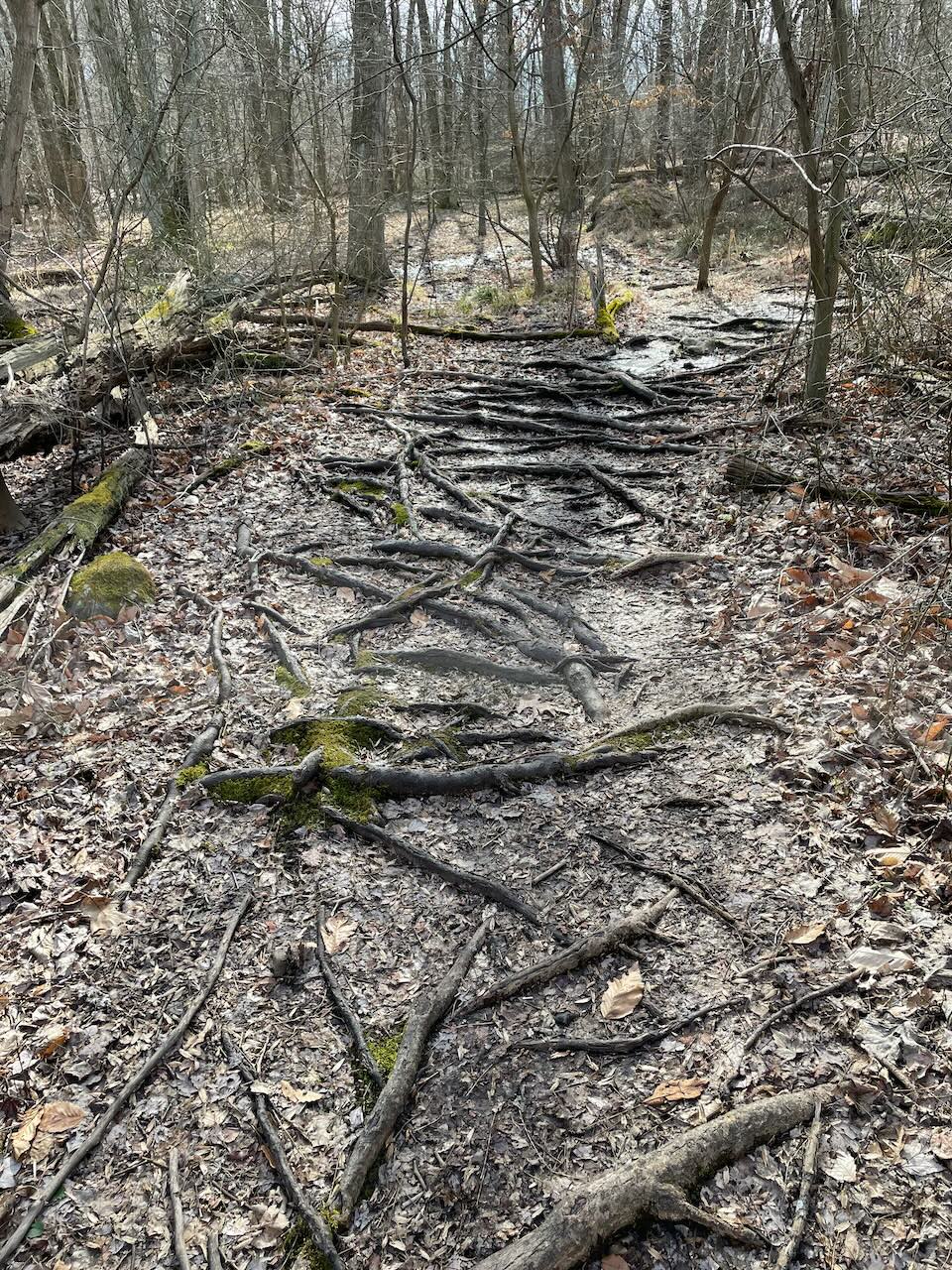
Long quiet walk through Tackamac North and Blauvelt State Park, not far from the city (visible int he distance from a viewpoint), with narry a bud or flower to distract from the woods' de/recomposing work. 

Friday, January 27, 2023

Police brutality

A photograph by Tyre Nichols, beaten to death by police in Memphis.

Thursday, January 26, 2023

Gifts of trees

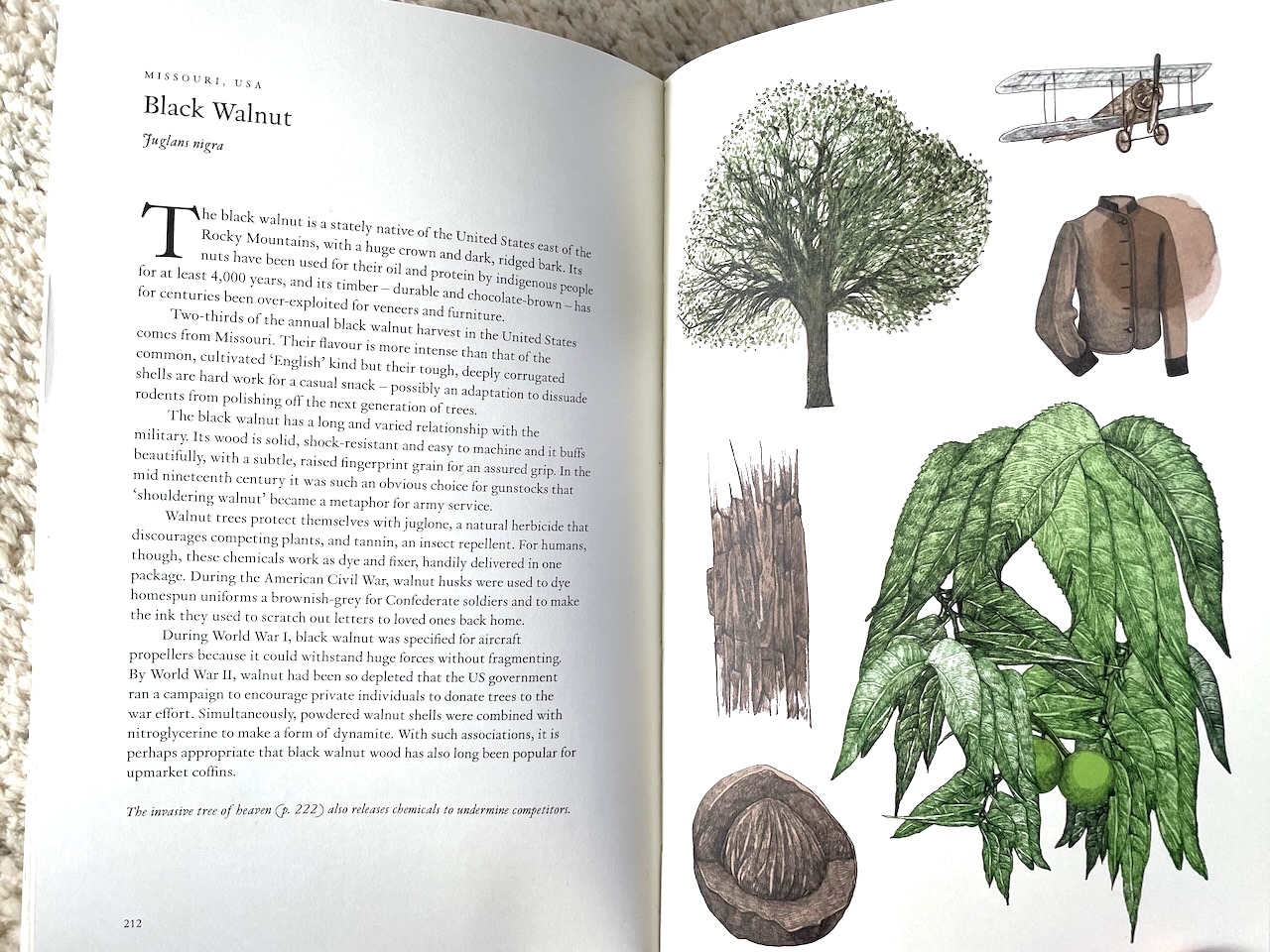
I've made my way through another diverting tree book, Jonathan Drori's Around the World in 80 Trees (London: Laurence King, 2018). There are a lot of tree books around, and I stumbled on this one while searching for a used copy of something else, an Around the World in 80 Trains my sister told me about. (There are, as you may imagine, many many Around the World in 80... books; merci, Jules Verne.) Drori proceeds roughly south and then east from the UK, providing portraits of trees, their environments, and their place in human societies, accompanied by drawings by Lucille Clere. Along the way all sorts of key tree concepts are effortlessly introduced too.
Drori doesn't get hung up on matters of definition: With a few provisos, the broad definition of a tree is a plant that has a tall, woody stem; it can support itself and lasts from year to year. Botanists debate about how tall such a plant must be. I've decided not to be too precious about this. The most important fact about them is shared with other plants: The world's trees are astonishingly diverse - we now know that there are at least 60,000 distinct species. Unable to run away from animals that would love to eat them, they manufacture unpleasant chemicals as a deterrant. They exude gum, resin and latex in order to swamp, poison and immobilize insects and other attackers, and to exclude fungi and bacteria. (9) 
Eventually we learn that trees, like all other forms of life, in fact have symbiotic relationships with many other species (mycorrhiza are introduced with the fifth tree, the Silver Birch), but this isn't Drori's starting point. Trees are agents, as we learn, protective, manipulative and sometimes even aggressive. But as interesting to Drori is the way that trees' gums, resins, latex and other defensive traits are put to all manner of unintended uses by us humans.
Serendipity is important in Drori's framing. His first two trees - London Plane and Leyland Cypress - are both hybrids, and hybrids of recent vintage. Both seem to have happened accidentally in British gardens, which brought together trees from widely different places. (It's not part of Drori's brief to foreground the Columbian exchange or empire.) In the first case it's the American sycamore and Oriental plane, hybridizing perhaps three centuries ago. In the second, it's two North American trees - yellow cedar from Oregon and Monterrey cypress from California - meeting as expats in Wales. This happened not much more than three decades ago, but they're already the most widely ordered plant for British gardens. (They're perfect for privacy-protecting hedges.)
There's plenty to wonder at in the trees we learn about, but Drori nowhere muses, as strangler fig prophet Mike Shanahan did, that trees elicit experiences of awe, gratitude and reverence. That people develop "superstitions" around trees is a curiosity. Instead, there's always stuff going on. Trees are used by human beings for food and shelter and medicine, for nets and clothes and ship's masts, teas and tonics and poisons, canoes and charcoal and violins. In all these cases (except perhaps eating), we're putting trees' tricks to our own uses. 
If there's a moral to Drori's story, it's about the meeting of arboreal and human ingenuity, just that we are liable to make too much of a good thing, felling vast forests without a thought for the morrow. That human beings didn't use to do that - and may have learned it through the omnicidal ethos of colonialism and the scale-destroying logic of capitalism - isn't part of the story but needs to be! (I suppose the thought of going around the world in 80 whatevers may be part of the problem.) For most of human history, humans beings lived with trees - Kimmerer would say human people lived with tree people - caring and being cared for. 
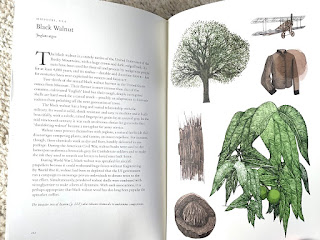
In a time where our indebtedness to trees is obscure and abstract (in part because that derivate tree product plastic has replaced so much), we need to be reminded that our relationships with them are material, not just spiritual, involving giving and taking, not just beholding. This book might help me get this across to students in "Religion of Trees." We have always been involved with trees, not just surrounded by them. But I'd want to go one step further, suggesting that relationship is in a deep way preceded by symbiosis. Trees, most of them vastly older than we are (unlike those hybrids), developed in all their astonishing diversity always bundled with symbiotic species of other kinds, eventually welcoming us to join the feast.

Wednesday, January 25, 2023

Bühnenweihspiel


The stars aligned, and we scored cheapie orchestra seats at the Met, 14th row far left! The opera was Poulenc's "Dialogue des Carmélites" and it was worth sacrificing the fullness of sound we're used to from the Family Circle for a closer view of the singers, who were, of course, all wearing the same costume. I've not seen this opera performed before and it's a curious confection. This production, originally from 1977 (today's was the 64th performance), does wonders with an abstract black and white set, capturing the austerity of Carmelite life and its challenge to the busy colorful world they renounce. In the vast dark cave of the Met's stage, their "dialogues" about faith and pride, calling and ultimately martyrdom seem at once intimate and cosmic. It is a very 20th century French Catholic opera, almost decadent in its renunciations and provocations. The last scene, one of opera's great coups de théâtre, embodies that extravagant asceticism, daring us to believe that the nuns of Compiègne, now dressed colorfully like characters in any historical opera, transcend even art as their voices are cut off by the guillotine. We're left abandoned and yet exalted, having caught a glimpse of the terrifying and glorious reality they inhabit. (Or would be, did not the gaiety of the curtain call follow minutes later. Oh well. Just an opera after all.)

Ever After

In a lecture hall again - first time since Spring 2020! To celebrate I placed our class in a lineage of classes and events from 1920, 1951, 1963, 1968, 1983, 2012.

Tuesday, January 24, 2023

生日

Yesterday was my birthday... they're piling up!

Monday, January 23, 2023

Heavenly banquet

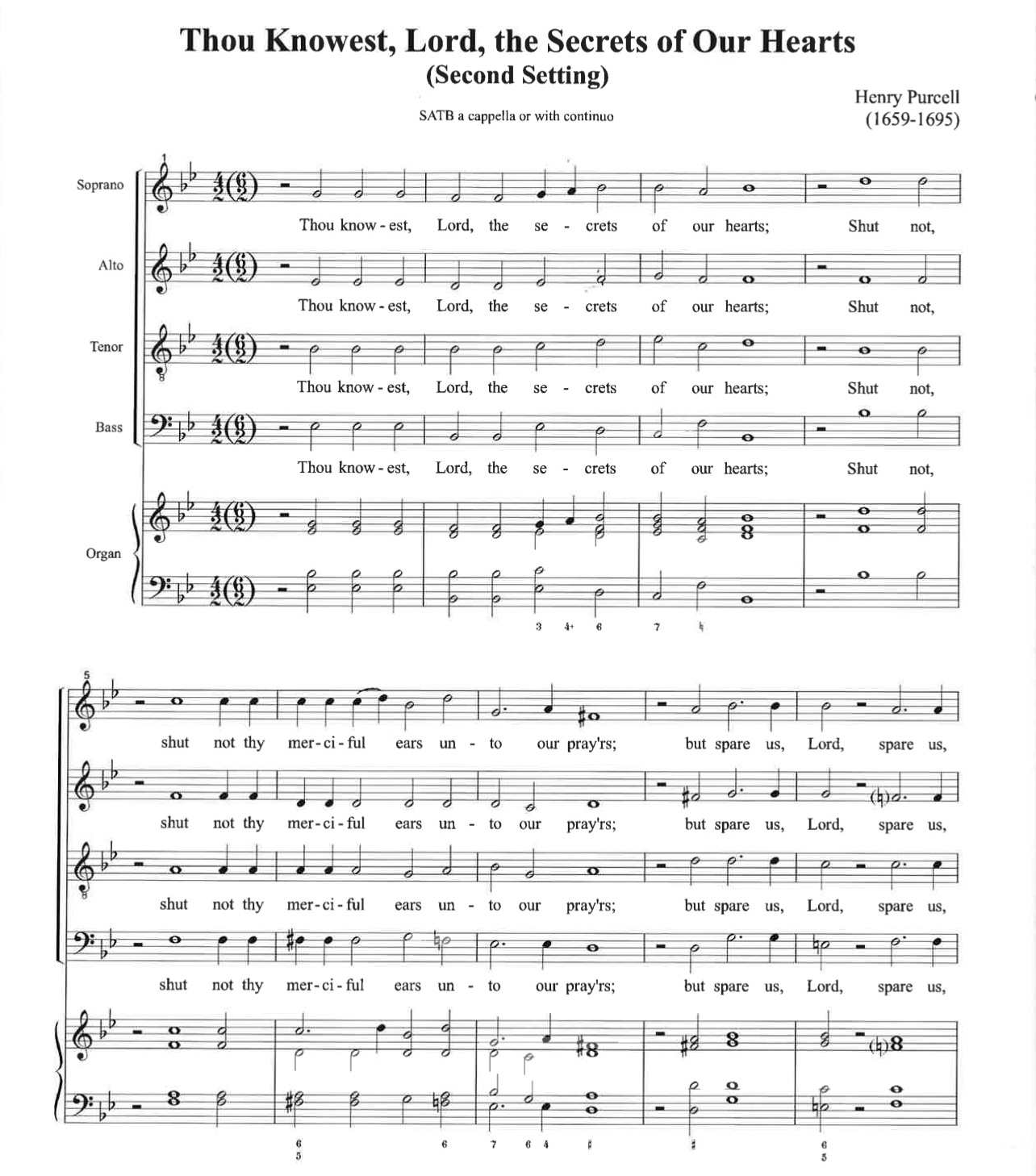
In church today the choir sang an anthem of Henry Purcell's which I have always loved and always wanted to sing. Wonderful! The occasion, which also elicited "In Paradiso" from Fauré's Requieum and Parratt's setting of the Russian Contakion for the Departed, was a memorial service for Father Rand Frew, Rector in the 1980s and founder of the Holy Apostles Soup Kitchen. During the service, the big ladle which is the Soup Kitchen's emblem was placed on the altar.