Just finished an astounding book. It's the recent translation of an untranslatable classic of Arabic literature, the
Maqāmāt al-Ḥarīrī, written about 900 years ago. It's a collection of fifty tales, in each of which the same old man under wildly different pretenses persuades a different group of people to give him money or wine. Sometimes he appeals to their sense of justice, sometimes to their sense of mercy, always to their appreciation for virtuosity and wit. By the time they realize he was not who he claimed to be, the man - his name is Abu Zayd - has vanished, though the narrator al-Harith, a younger man who manages always to show up in a town when Abu Zayd is about to speak, always tracks him down afterwards. But as often as not, those duped don't feel cheated - such is the splendor of his eloquence.
Such, indeed, is the splendor of the Maqāmāt's eloquence that it has for most of a millennium been the key text used by Muslims studying the language in which Allah revealed the Qur'an. There are apparently innumerable manuscripts and editions, almost always full of commentary and explanation, for the fifty tales explore every avenue of eloquence and accent, puzzle, reference, rhythm or rhyme available in Arabic - more than anyone unassisted could know.
This all makes it an impossible challenge for a translator, unless that translator is as splendid a shape-shifter as Abu Zayd. I can't compare with the original, but the translation by Michael Cooperson, under the title
Impostures, is one of the most remarkable things I have ever read. In order to convey the range of language of the
Maqāmāt and to honor the fact that every tale (except perhaps the last) involves an elaborate deceit, Cooperson offers
Fifty Rogue's Tales Told Fifty Ways, writing in the style of every kind of English literature and argot, from Chaucer to Gilbert & Sullivan to Woolf, from Cockney rhyming slang to Los Angeles Spanglish and Singaporean Singlish, from online Anglish (using only words with Anglosaxon roots) to contemporary management jargon or self-help psychology. (An intermediate insporeation is Raymond Quéneau's
Exercises de Style.) Each chapter duly includes a glossary and bibliography, as well as notes explaining how specific details of the Arabic original have been rendered in this particular language. And since Abu Zayd always spins out poems in different meters, there's poetry in each one, too, usually in a kindred if different style than his main con (whether sonnet or doggerel or everything in between)... or the narrator's, which is different again. The erudition involved would crush you if it weren't all so well done - and such fun!
Before you're even a quarter of the way in, you start to appreciate English in a new way - as a global language, with a complex history and riches of street and literary convention and invention beyond imagining. And then through that you're able to grasp that Arabic might be similarly capacious - indeed already was long before English was anything at all! The delight you feel at Cooperson's vast knowledge and limitless wit connects you to of all the people who studied the original... but also to the fifty sets of people conned by Abu Zayd. I found myself marveling at the profound sophistication of a civilization which so appreciates literary art and artifice.

And then wowed and cowed at the thought that all this enjoyment of language's capacity to enchant - and deceive - served to make people fluent in the language of the divine. Was the reader's pleasure in the ingenuity of the impostures no threat to piety? Apparently not! Again, what depths of spiritual sophistication this bespeaks, and what dazzling depths in the divine. How terribly poor a tradition would be that was uninterested in or even threatened by language's capacity to charm, that thought that any important truth - not to mention divine truth - could or should be merely literal.
I mentioned that the last tale might be an exception to Abu Zayd's prodigious capacity of invention. In it, Abu Zayd, feeling his mortality, repents of his ways, using his last haul (for yes, there is an audience, so moved by the sincerity of his repentance that they give him many gifts) to build a house of prayer, and ends his days in constant prayer. As he explains to the young narrator, his final trick seems to have caught him: when he asked the people's prayers that he be forgiven, they actually worked. Cooperson renders this tale in the language of the autobiography of Margery Kempe (d. after 1438).
Be thi fadyr, I stode beforn him in dowt, and in purpose to desseyven hem, but than I was steryd in my soule to contricyon. He is wel blyssed that thei hymn liken, and dampnyd is he by hem acursyd!
[By thy father, I stood before them in doubt, and in purpose to deceive them, but then I was stirred in my soul to contrition. He is well blessed that they him like, and damned is he by them accursed!] (50.7; [NYU Press, 2020] 473)
But Cooperson's chosen the idiom of Kempe because he thinks this might just be Aby Zayd's final ruse - and he finds Kempe's account of her conversion a little unconvincing. Abu Zayd's final parting words to his friend, we learn in Cooperson's notes to the chapter, cites from an earlier text
part of a conversation between Moses and his teacher, a mysterious teacher referred to as al-Khidr. The latter has just performed a series of inexplicable actions—knocking a hole in a boat, killing a boy, and repairing a wall in a town full of misers. Moses, who had promised not to ask about anything al-Khidr might do, is unable to keep his promise. Al-Khidr then bids him farewell, but before taking his leave explains that each of his apparently senseless acts was performed for some greater good. … With this allusion, Abu Zayd seems to be suggesting that all of his tricks and lies contain some lesson for al-Harith, who is too obtuse to grasp it. (481)
But isn't the entire text composed of such deceits? The confidence of this book of confidence tricks puts me in mind of Bayle's Dictionnaire, which seemed to many to be a skeptical undermining of all certainties but may have been a work of piety, helping us feel the hollowness of all our best efforts at making sense of a reality thus known to be more profound than we can ever hope to grasp. I don't think that's Cooperson's take, but he's confident enough as a translator to let the reader twist in the wind as Allah may or may not have Abu Zayd...
I've heard of people who became Muslim because of the beauty of the recitation of a text in a language they didn't even understand, artistry divine. But the Maqāmāt al-Ḥarīrī's artistry is human - too. What of our capacity to be overjoyed by the unending play of deception and revelation?


.jpeg)



.jpeg)


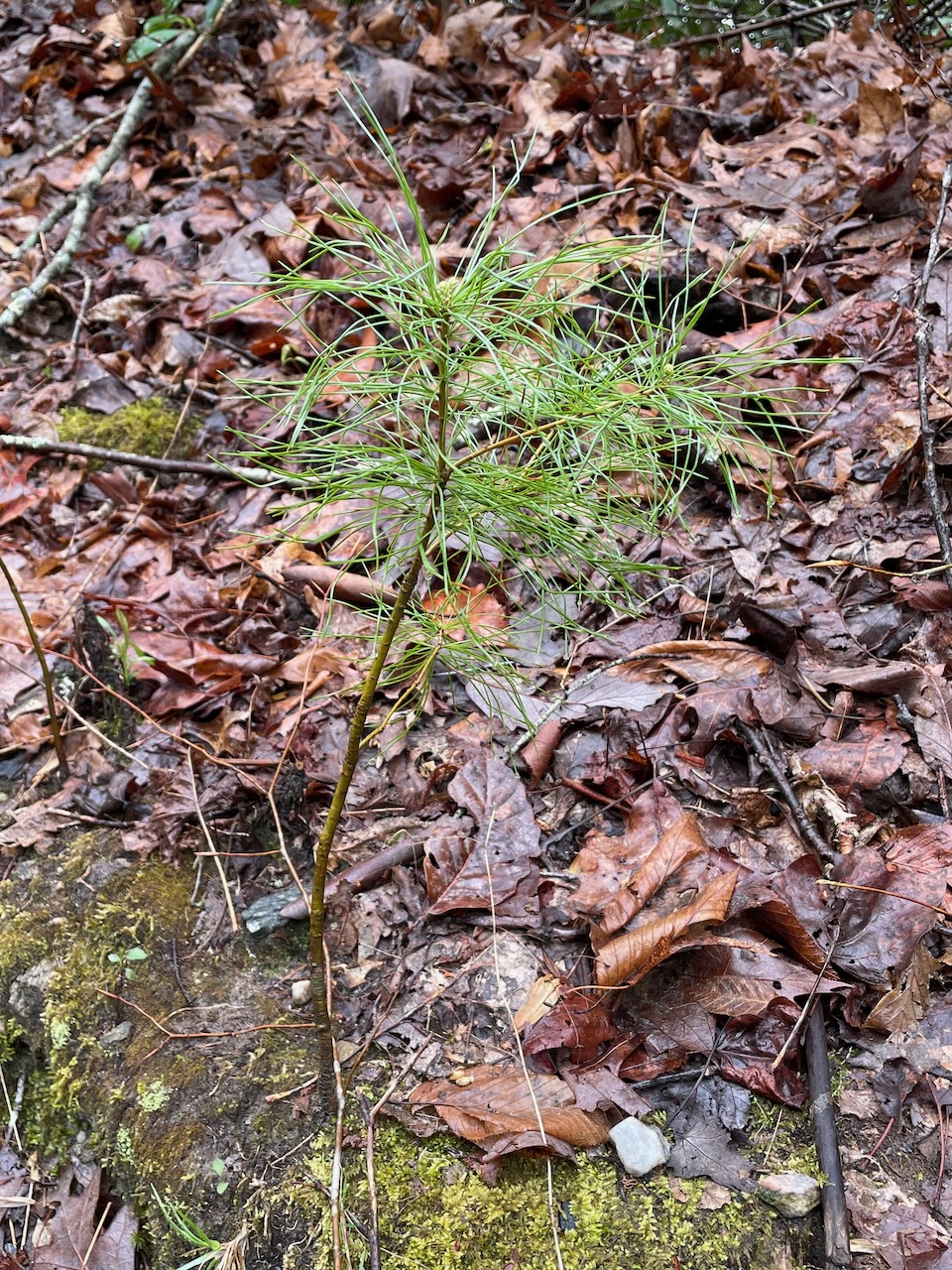
 were in spectacular bloom, native plants are taking their time. These little blue flowers - squill, I think they're called - aren't native, and the woods beyond them, across the Bronx River, seem to offer the same the grey-brown scene they've offered for months. Not quite...


 New York experienced an earthquake today but I didn't feel it. I was part of a group of Trees NY volunteers helping plant some swamp white oaks on Randall's Island. It was my first time planting and, despite the din of the jackhammers clearing a space for us, an easier task than it apparently usually is: our treebeds were full of freshly dumped soil, loamy and easy to shovel. A mini forklift helped with moving the trees. The hardest part was removing the wire cages and burlap from the rootballs.

 Weird weather system passing through. I've never seen our windows fog up like this before. Looks kinda fun - from inside!


 of the light with candles? I didn't, before I became a Triduumite. But somehow none of this mattered, or maybe it even contributed to the giddy joy of the morning. The work was done, we'd been there for it, we were there together, the world has no idea. The point of Easter is just to say "Alleluia" as many times and ways as you can anyway, isn't it? The musical selections helped, too, including old chestnuts like "Jeusus Christ is Ris'n Today," "Good Christians All, Rejoice and Sing" and, yes, "The Strife is Over" and the Easter hat of the organ repertory, the toccata from Widor's 5th symphony for organ but also some Bach and the spiraling euphoria of some modern gospel - with probably the first guest saxophonist in our church's history. What a nifty place! Maybe some of the fair-weather Christians got the vibe?