 Not sure if it was deliberate, but definitely memorable: just as the illustrious Dipesh Chakrabarty was introducing the difference between human history and the "deep history" of the planet, an alarm went off. He'd told us as he was starting that he was setting his alarm for forty minutes but evidently set it for forty seconds instead.
Tuesday, June 08, 2021
Out of time

Monday, June 07, 2021
Breakout room ending in 58 seconds

Yesterday was the last Sunday our congregation met to worship on zoom - well, our rector carefully said, the last time for the foreseeable future. For fifteen months, as we've gotten the hang of this mediated "house church" thing, we've been talking up all the things it's allowed us to do, especially how it has helped us see and be seen by each other, wherever we happen to be, the spaces of our lives linked. Will we remember this special form of communitas, I wonder, once the satisfactions of being embodied in the same space return?
Sunday, June 06, 2021
Distant call
Sifting through old photos, I ws surprised that this snap of the farther reaches of Torrey Pines Beach should have been the one to surface all my silenced yearning for the Pacific. Not even particularly pretty,

this horizonless and somehow unsettled view from 2016 just grabbed me! I suppose it works like an old painting, its little human figures drawing you into its conjured "distance." So happy I'll be there soon!
Saturday, June 05, 2021
Forest life

Fun outing to spend the day with some friends who live in the woods in the Catskills. It was the perfect day for it, clear and not too warm, a respite from what seem like weeks of less clement weather, cold and hot and stormy. As the trees steadily shed new seeds and old needles, pyramidal ferns rose like housing complexes all around. But it was a humble Eastern (Red-Spotted) Newt who stole the show!

Friday, June 04, 2021
Whitewash?
At a dinner with friends, the conversation came around, almost regretfully, to politics - the "craziness," as one friend, a Texan, introduced it. After we commiserated - Republican-led Texas has reecently taken the lead in craziness on reproductive rights, voter suppression, and guns - I waxed purple about the days when American democracy worked, when political parties won elections by hearing the citizenry and so adjusting their platforms that they represented majorities, rather than representing the presumably fixed interests of a given subset of the population and pouring their efforts into suppressing votes from others. With all due respect, another friend, an Italian American, said, that's a very white view. Indeed ... it is. The playbook for what's disengenuously called "electoral integrity" was written during Jim Crow, when white southerners (Democrats) used every lever of power to prevent African Americans from exercising the right to vote guaranteed by the 14th and 15th Amendments. One might bring in Jill Lepore's reminder that, since the franchise was restricted to men until 1920, for most of US history most adult citizens weren't able to vote. Democracy in America has been stumbling from the start - indeed has been tripped up, usually by, yes, folks like me. But the ideals distinguish truly better from worse behaviors, and not every appeal to democratic ideals has really been an effort at usurpation.
Thursday, June 03, 2021
Worth untold thousands of words

Wednesday, June 02, 2021
Baidu Anthropocene


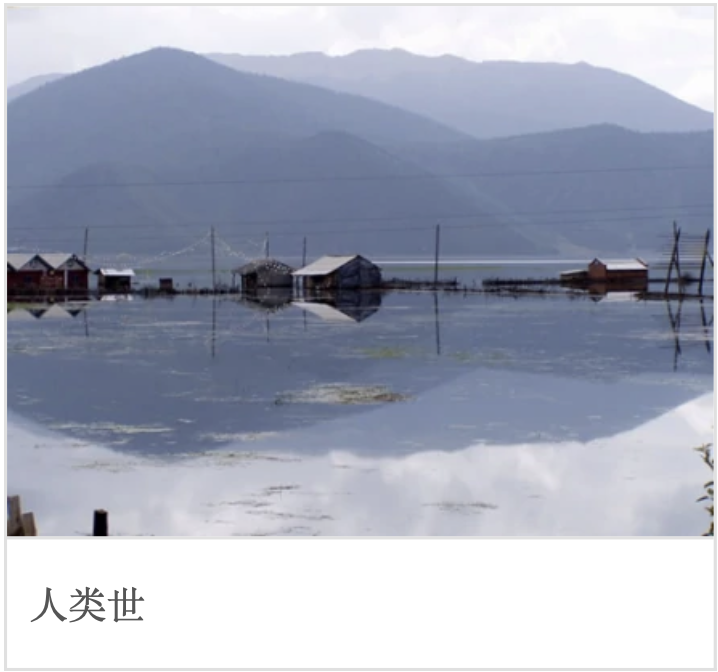
 What do these pictures say to you? (The second seems to be from NYC.) They certainly don't say "Anthropocene" to me, but I found them on the Chinese Wikipedia-analog 百度百科 Baidu Baike article "人类世 [Anthropocene]," which also includes the nearly illegible chart at right and the two further pictures below. The contents of the article are unobjectionable but there's one thing strikingly different from western accounts, and it's mentioned at the start and end of the article. Accounts I'm familiar with describe debates about when the Anthropocene should be said to have begun - with the invention of agriculture, the steam engine, or the "Great Acceleration" after WW2 - and this one does too. But it goes on to observe:
 2010年6月,澳大利亚国立大学微生物学著名教授、人类消灭天花病毒的功臣弗兰克·芬纳称人类可能在100年内灭绝,“人类世”将终结。
Australian microbiologist Frank Fenner, leader in the eradication of smallpox, apparently said in 2010 that humanity might be extinct within 100 years - thus ending the Anthropocene. That's not quite right... we may shuffle off this mortal coil, but the damage we've already done to Earth Systems will endure long after that, evidence of the crime preserved in the geological record long after we're gone.


Tuesday, June 01, 2021
Memorial
Here are some of the ice cream sundaes we helped assemble at Holy Apostles Soup Kitchen yesterday. I've been part of a holiday sundae assembly line here before, in the heady pre-covid days when the church was full of the happy din of guests at tables, and this was a  more muted, somewhat smaller scale affair. While the food is assembled in the sanctuary, guests receive it from a little tent set up in front of the church entrance, and have to take it with them to eat somewhere else. Still, our sundaes apparently were well received!
Monday, May 31, 2021
Ashen
 How many masks can you see in this throng of naga sadhus at this year's Kumbh Mela in Haridwar? (I count five, more than I expected.) This pilgrimage of millions to bathe in the holy Ganga near its source was one of several government-sanctioned super-spreader events contributing to India's ongoing devastating covid-19 tragedy. We had a regime like that too, just a year ago, its mobs itching for more.
Sunday, May 30, 2021
Aloft

Twice in the last year I made a booking (on this very JetBlue site) and then had to cancel it, but this time looks to be for real. Thank you vaccinations, thank you President Biden for getting them out there.
So it looks like just over a fortnight from now I'll be back in California for the first time in almost a year and a half!
I get swoony at the thought!
Saturday, May 29, 2021
FISP
 As part of a long-mandated safety inspection of our building's façades, we've had to disassemble our "enclosed balcony." For the next several months (...) all our balcony windows and decking are stowed inside the apartment. A big hassle we had a bear of a time scheduling, this turned out in the end to be a little less disruptive than we feared, though still literally cramping our style. Unexpected consequence is that, while the balcony's off limits, we now have an unimpeded view of our neighbors - and they, should they wish, of us.
Friday, May 28, 2021
Democracy in peril, again
So the Senate Republicans blocked an independent, bipartisan commission to study the attack on American democracy of January 6th. Yet another shocking non-surprise, from a party which keeps plumbing new depths in this department. (My friend M was right to call the past president "the symptom": while a professional attention hog, he's part of a far larger problem.) The short of it: congressional Republicans don't want to be victims the next time their rabble attacks, whether in primaries or the next time there's an election whose results the red hats refuse to accept. The long of it: they're reconciled to their rabble's attacking everyone else, abetting it - indeed, after this cowardly vote, encouraging it. To put it mildly, democracy demands more public mindedness than this.
Thursday, May 27, 2021


Wednesday, May 26, 2021
Deep dive

The Holocene was not a blank canvas upon which human societies could express themselves. Its climate was not a dull, fixed reality, safely in the background and separate from human history. On the contrary, states and cultures have always been intimately shaped by complex, changeful feedback loops between politics and climate. (150)
I've found myself referring to this narrative frequently. I planned to use it in the last iteration of "Religion and the Anthropocene" (it fell in the week I gave exhausted students off), and want to use it for the upcoming Anthropocene Humanities courses, too. I share Davies' sense that many Anthropocene discussions are weakened by thoughtless representation of the Holocene as a stable "Eden," paying even less attention to the great changes preceding it. (The map above shows The Last Glacial Maximum, 23,00-16,500 years ago, whose ebbing ushers in the Holocene.) In fact the Holocene, the context in which all human "civilizations" emerged, was stable only relative to what preceded - and will follow - it. The flows of human history are shaped by often quite sudden swings in temperature, droughts, the effects of changed oceanic currents, wiggles of the magnetic poles, and much else. (And civilization wasn't an "Eden" for most people; Davies reminds us that hunter gatherers led longer, healthier lives than their sedentary successors, civilization benefits only elites.)
Davies' argument is that we can better live into the Anthropocene if we recognize what it's displacing - that the "birth of the Anthropocene" coincides with the end of the "Holocene" - and that this can help us accept our place in the complicated feedback loops of human and other than human forcings that have always shaped human destiny. The Anthropocene poses new challenges - a more unstable context than humans (or other life forms) have known for 12,700 years - but it's not our first rodeo. We've been variously on the make since before the Holocene began... Here's how he starts his story:
The dawn of the Holocene saw ice and permafrost retreat from Europe, as hazel, birch, juniper, deer, and boars spread north (a temperature rise of seven degrees Celsius can expand a tree species’ range a thousand kilometers toward the poles). Humans followed, hunting the forest mammals with bows and arrows, gathering hazelnuts, and catching eels in wicker traps. The richest center of this Mesolithic culture was probably Doggerland, a low-lying territory of marshes and narrow valleys on the northern edge of the continent. Wetlands expanded rapidly in the tropics, attested to by rising levels of atmospheric methane. Pottery, still unknown in the Fertile Crescent, was already a widespread and long-standing technology for cooking and display among the hunter-gatherers of China, Japan, and northeast Asia. The ceramics of the Jomon hunter-gatherers of Japan—whose diets involved acorns, fish, and smoked pork—grew increasingly sophisticated in this millennium as their first year-round villages emerged. Villages were established in North China as well; their inhabitants hunted deer, processed seeds, made tools of bone and antler, and may or may not have adopted sedentary lifestyles. Domesticated food plants, dissimilar to their wild progenitors, evolved in the Americas: nomadic cultivators in coastal Ecuador and the Colombian Andes domesticated squash and arrowroot, respectively. (164)
My use of Davies' "epic" of the Holocene has been a little different. The week I'd assigned it for in "Religion and the Anthropocene" last Fall was the one in which we were also to read the Dao De Jing. The idea was that it makes sense to understand things in terms of flows and oppositions - at every level from the cosmic to the personal - as Daoists do when you realize that the Holocene wasn't a featurelessly stable background to human endeavor, that balance or harmony are processes, and far from automatic. Relatedly, I've referred to Davies' "epic" in connection with the Book of Job, a reminder that the wild and barely tamed world of the theophany records experiences of the natural world as anything but a stable backdrop. The intrusion of Stengers' Gaia isn't new, and some of our most venerable traditions know all about it, if we can learn to hear what they're saying.
More broadly, I've been recalling Davies' "epic" in the effort to convince myself that the religious legacies of the "world religions" (and others, of course) aren't all automatically and obviously obsolete because they take for granted a Holocene stability which no longer obtains. The Holocene was more stable than the Anthropocene will be, but it didn't allow human beings to be so unaware of contingency, catastrophe and irrevocable change as to make them pollyannaish in taking natural harmony for granted. Increasingly I'm thinking that that blithe pollyannaishness is part of the Anthropocene problem: the transformed experience of human power over (and independence of) nature made possible by the force - unconnected to the cycles of living interaction which previously structured all life including our own - of fossil fuels.
Davies' exercise is a little contrived of course, and perhaps - despite its emphasis on unexpected changes at many levels - too coherent.
The pace of both technological and climatic change accelerated dramatically in the seventh millennium (3700–2700 B. C.). It could be called the Hieroglyphic millennium: writing was among the period’s many innovations. The changes in climate were ultimately driven by the changing geometry between the earth and sun. Ever since the Pastoral millennium [8700-7700 B. C.], the amount of summer sunlight striking the Northern Hemisphere had slowly decreased. The decline in summer heating steadily weakened the force behind Northern Hemisphere monsoons, but the monsoons’ feedback relationships with vegetation cover (among other things) meant that rainfall patterns often altered not gradually but in sudden, localized jumps. The seventh millennium saw a great cluster of these regional jumps to much drier conditions. In essence, it witnessed the emergence of the modern world’s arid belt above and around the Tropic of Cancer, from the southwestern United States to the deserts of the Sahara, the Middle East, and Central Asia. It is tempting to link these climatic changes to social ones, and to see the struggle to cope with desiccation in the monsoon belt as the common factor behind the (very) approximately simultaneous emergence of complex societies on three continents. Grand paradigms like that always work better as provocations than as dogma, but the widespread socioecological reorganizations of the Hieroglyphic millennium, like the temperature anomaly of the Diluvian millennium [6700-5700 B. C.], undoubtedly constitute a major landmark for the view from the Anthropocene. (172-73)
As a literary scholar he would admit this, no doubt: every narrative is, well, a narrative! But rereading it with a class of Chinese students in mind, I notice in a new way that, while Davies includes the history of civilizations on all continents (and the Austronesians who settled the islands of the Pacific), the epic is anchored by a focus on the Fertile Crescent, the only part of the world on which there's a near continuous spotlight. He admits this, too, when explaining how he chose names for the Holocene millennia. He explains that this region, a hub of three continents, happens also to be one whose "development is (uniquely, for now) well enough understood to allow for detailed discriminations between each millennium" (162). The other data points he offers suggest but don't supply alternative, let alone plural, narratives. I don't know if those students, rooted in "5000 years of Chinese civilization," have a different sense of "deep time"... perhaps we can talk about it! Maybe Daoism will return, even!
Tuesday, May 25, 2021
Chez voov
Meet Voov, the almost-zoom. Operated by Tencent, mother of WeChat, it has an interface based pretty obviously on zoom. I'm

getting to know it because it's the platform through which I'll be teaching my course for the Renmin International Summer School. The

Monday, May 24, 2021
Neel
 Went to the Met today for the Alice Neel show. It's a beaut but I don't really have a sense of how her portraiture-focused practice changed over the more than five decades of her career (she lived 1900-84). The exhibition is organized thematically rather than chronologically, intriguing in its own way... but I kept doing double takes on seeing a work from the 1930s or even the early 1920s that already was recognizably hers, and masterful. Guess I'll need to go again!
Sunday, May 23, 2021


#/media/Fichier:Broadway-1885-APL.jpeg)
Saturday, May 22, 2021
Scales fall off
As I get back into teaching about the Anthropocene mode, I'm appreciating The Anthropocene: A Multidisciplinary Approach by two British paleobiologists and an American intellectual historian of Japan. They insist on a "multidisciplinary" rather than "interdisciplinary" approach because the different disciplines we need to make sense of things aren't convergent in their methods and forms of argumentation, and we're best off learning from each as well as from the frictions between them. They write accessibly about complicated methodological issues like different understandings of scale and causality: how can one begin to make sense of vast biogeochemical changes and the fact that they have largely taken place within the span of single human lifespan, or that human efforts over the next lifespan will have far far far-reaching consequences?! This humble insistence on plurality allows them to push back against totalizing responses, whether scientistic or nihilistic, while holding on to the Anthropocene language as a reminder that all these phenomena are part of one "predicament." (They prefer "predicament" to "problem," which gets us looking for a single solution and inclines us to accept a single discipline's way of deciding it. Historians and geologists both accept periodization as a useful organizing principle but know how not to let it displace the interlocking complexity of actual causality.)
 This graphic (from 2019) doesn't appear in their book but complements their warnings about too-consistent views, and in an arresting way makes real one of the Anthropocene's mind-blowing numbers they cite: Our "anthropomass" (as Vaclav Smil calls it), combined with the mass of our domesticated animals comprise an astounding 97% of the total zoomass of terrestrial animals. (Almost as overwhelming as Our strangely unfamiliar planet now has more than 193,000 human-made "inorganic crsytalline compounds," which vastly outnumber Earth's ˜5,000 natural minerals!) Livestock are a big part of the footprint of a surging and increasingly meat-consuming human population, major drivers of CO2 as well as rainforest destruction; their care - grazing land as well as land growing feed for them - now takes up 27% of land mass!! But that's still an unassimilibale abstraction, detached from the local realities that comprise it. This map from the vastly informative Our World in Data (they also have country-by-country breakdowns) makes that 27% real in an irreverent way - equivalent to the whole Western Hemisphere!! And it contains other delicious provocations too. The counterintuitiveness of placing "built-up areas" in North Africa, or "freshwater" in Mongolia - not to mention placing Europe in "barren land" - shakes up our unthinking intuitions about geography, geopolitics and history. Once you've aggregated Anthropocene-scale phenomena - you can't just go back to the tired truisms of periodized world history and human geography.
Friday, May 21, 2021
Recapitulation
 Not sure just why this fern so captivates me - is it the wintry color palate? Or the pink and purple? The fractal frenzy? All of the above. But most of all: it reminds me of seeing snowy mountains from the air, a scene which to me looked like, well, leaves! Here's the image I'm recalling. It's clearly stayed with me: snapped (and shared in this blog!) thirteen years ago! My name for the image was "leaflike."

Thursday, May 20, 2021
Covid update
 By one measure, the seven-day average for US Covid-19 deaths has apparently fallen below 500 for the first time since last March. As if five hundred were a small number! And that still means that more - often many more - than three thousand five hundred souls have been lost each and every week for sixteen months... and that's only in the US.
Subscribe to:
Posts (Atom)