Wednesday, May 04, 2022

Pirouette

Something rather lovely happened in "Religion and Ecology" today - our final class session around an assigned reading. The reading was the last section of Braiding Sweetgrass, where Kimmerer takes on the kinds of questions of despair and hope we wrestled with Monday, and resolves them by reminding us we're not in this alone. As one student was to quote: It is not enough to weep for our lost landscapes, we have to put our hands in the Earth to make ourselves whole again - something the Earth wants too. I choose joy over despair. Not because I have my head in the sand, but because joy is what the earth gives me daily. (327) 
Before we got to this, though, I had the class go up to the fourth floor to commune with the red maples we've been seeing out our classroom window - they're gloriously in leaf - and then descend to the courtyard. (I took this picture from our second-floor classroom, where I was guarding laptops.) They came back abuzz, having found some of the yellow maple samaras they'd seen clustered under pillowy green leaves above twirling down upon them. What are those helicoptery seeds called, one asked, another supplying the answer: whirligigs.
Time to turn to the text, pairs tasked with choosing an important passage and writing it on the whiteboard. They made excellent choices; going through them let us experience the poetry, the sweep and the detail of Kimmerer's text weaving. We ended the class listening to an excerpt of a new podcast where Kimmerer retells the story which frames Braiding Sweetgrass, where it is called "Skywoman Falling." (It's the April 26th podcast here, starting 3 minutes in.) 

The book starts (and ends) with the story of Skywoman in freefall, prevented from dying by the cooperation of many animals, and the question is never raised why or how she fell, or from where - though we know she has a bundle of seed plants in her hand, and later learn that she is pregnant. What came before doesn't matter: the world the animals and she create is our world. But now we learn about the world where she lived, about a great Tree of Life which seeded all plants but has been blown over by a storm, and a women who peers into the hole where the tree was and topples into it, grabbing onto a branch of the toppled tree in a vain effort to stop her fall.

Why tell this part of the story now - and why not before? We concluded it had something to do with the book's argument that our world is co-created and sustained by many peoples, including us. Maybe the more recent, fuller telling speaks more to the sense of ecological cataclysm - the tree of life uprooted by a storm?! - and the importance of holding on to what we can of our disrupted world. However she comes by it, and even if it didn't save her from falling, the branch she holds introduces plants to the emergent turtle island.

Our classmates outside the window were waiting for us to put two and two together, and finally it hit us. "Skywoman falling" - the story which begins the book and which Kimmerer starts to retell at the end, fighting off despair - starts like this: She fell like a maple seed, pirouetting on an autumn breeze (3) - a whirligig. What a gift of joy!

Whirligig


Seeds of our red maples, captured by a student...

Man's best friend

Wrapped "After Religion" with a short video of a funeral for robot puppies in Japan. Sony developed artificially intelligent "AIBO" in 1999 and, weaving together the human need and gift for care, machine learning and an endearing "mischievous" streak, they became the beloved companions of many, especially solitary older people. Production was discontinued in 2006 (a new generation arrived in 2018), and customer support ended in 2014. Other companies stepped in to repair still beloved AIBO with the parts of others who had finished their service, and one company decided to hold funerals at a nearby Buddhist temples for the "organ donors," employees standing in for the people with whose lives these AIBO had been entangled. 
There's much to appreciate here. The Japanese practice of kuyo (ritualized thanks to inanimate helpers) makes intuitive sense even to us, animists all. Even if it's really their human interlocutors whose spirits we sense in them, the fact is that these human experiences inhabit these robots, even broken down. But the video also includes a fascinating feature, shown but not discussed. Besides the human priest, we're shown a team of robot priests who chant and ritually gesture towards the assembled AIBO... and then we hear a chorus chanting sutras - the warp of Buddhist funeral ceremony - and not in deep human but light robotic voices. It's silly yet profound.
Broader questions present themselves. How different is any of this from most human religion, using the technologies of its day to mark human care, connection and loss? I suggested to the class that they might see the array of AIBO as like the ancient "religions" we inherit, use up and abandon - a rather cute thought. But, reeling as we all are at the savagery of the SCOTUS' Alito faction's assault on non-conservative Christan understandings of gender and reproduction, I find myself thinking it a little naive to imagine religions as warm caretaking puppies rather than ferocious attack animals. Debrief on the course will have to wait for another day, but the menace of virulently undead religion needs to be a bigger part of the next go. 

Tuesday, May 03, 2022

Supreme injustice

Looks like a shooting range. 

Monday, May 02, 2022

Sitting in it

As "Religion and Ecology" wends to a close - next week is for student presentations and the final class for closing syntheses - we experience the way two of our main texts wrap things up. Wednesday we'll reach the soaring conclusion of Braiding Sweetgrass; today we saw how Whitney Bauman and Kevin O'Brien send readers of Grounding Religion: A Field Guide to the Study of Religion and Ecology on their way. "As authors and editors," they start, "we are worried, that this book might be a bit of a bummer."
I have the same worry about our class - but also the worry that it might have not been bummer enough. So we spent today's class discussing Bauman and O'Brien's three proposals for responding to the despair that haunts ecological engagement: (1) to accept that the world we know is lost, (2) to focus on the local, (3) to work for a new global ethic to respond to global challenges. I tasked students with writing a reflection on flimate despair and hope in pairs, which we then read together and discussed. Consensus there was not, but all felt that "despair" is the wrong framing. We need to own the grief and anger, sadness and anxiety we feel (one pair proposed "sitting in it" as a practice, a phrase I borrowed for our discussion), if they are not to lead to numbness. We are worried about the complacency that "despair" ratifies, its disavowal of accountability. 

What about hope, then? We repurposed despair as a sign of heart-broken but still living hope, a stage in cycles of feeling. But how not to get stuck in it? "Community," someone suggested, though she felt most people don't have that kind of community any more. "Only human community," I asked, "or also with other-than-human kin?" 

Sunday, May 01, 2022

Green

Spring creeps into every gap in our view, oblivious to human fears.

Saturday, April 30, 2022

I've been obsessively looking at maps of Ukraine for weeks but there are other maps to fill one with fear, too. This is one from Las Vegas, NM. Pink is area burned by fire; green is evacuated. Included in the green is Montezuma, site of the United World College, where I finished high school.

Flask


In the Study Collection of Greek and Roman works I discovered looking for Pan at the Met, some of the oldest things look the newest - or is it the brilliance of the curation that lets them float free of time, in supportive convo with shades past and present?

Friday, April 29, 2022

Pluralistic Universe

Mary-Jane Rubenstein, the author of Pantheologies, visited our class today and it was suitably pluralistically in person! Although she was zooming in we decided to meet in person, having perfected a hybrid community over the course of the semester with our classroom (and sometimes others, as no other class meets Friday mornings on Lang's fourth floor) as well as my laptop, which over the course of the semester has hosted most of the students when covid precautions prevented them from attending in person, swinging this way and that as discussion moved around our table and sometimes even leaving the room to join a group working in another. (After all this hosting it hardly feels like it's just mine anymore, to tell the truth.)

From her home office Mary-Jane shared the laptop - projected today also on a larger screen - with a student on a deep sea research vessel (currently near Hawa'ii) and was passed around the room to meet each member of the class, one of whom is never without her canine companion, before we moved to an extended Q&A the class had prepared. (Look closely at the image above and, in the image from the media console in the corner of the room, you can see the laptop, as well as yours truly taking a picture of the screen, albeit mirrored.) 

Since we were using the laptop speaker (to avoid reverb), Mary-Jane's thoughtful responses, sometimes funny, sometimes moving and always incisive, were heard from each corner of the room as different students framed different questions. It all made for a three-dimensional encounter students said felt markedly different from other virtual class visits they'd experienced. More, it lived out the pluralism Rubenstein takes from James' ongoing overlapping Pluralistic Universe where Things are 'with' one another in many ways, but nothing includes everything, or dominates over everything. 

Red tourism

Sent this picture of Japanese maples on West 12th Street to a friend confined within her housing complex in Shanghai. This was her reply.

Wednesday, April 27, 2022

Microaggression

Fuzzy nose-tickling filaments on the masks provided by our school reminded me of the cli-fi story a student in last semester's "Anthropo-cene Humanities" class wrote about future beachgoers terrorized by monstrous blue sea creatures composed entirely of the billions - trillions?! - of discarded masks generated by the covid pandemic.

Tuesday, April 26, 2022

Minor gathering

Had a gathering with some of our religious studies minors and two sympathizers in the Lang courtyard today. Their day jobs include politics, history, theater, fine arts and global studies. Several I hadn't seen without a mask, and some I haven't seen since before covid!

Monday, April 25, 2022

Dharma talk

In Religion and Ecology today, a little fillip of Buddhism before we start winding down - an essay by Joanna Macy, and Dogen's "山水経 [On the Spiritual Discourses of the Mountains and the Water]." The former describes a "greening of the self" happening because of presentiments of collective annihilation, scientific challenges to the idea of individuality and the growth of "nondualist spiritualities" like Buddhism. 

I have found Buddhism to be distinctive for the clarity and sophistication it brings to understanding the dynamics of the self. In much the same way as systems theory does, Buddhism undermines the dichotomy between self and other and belies the concept of a continuous, self-existent entity, It then goes further than systems theory in showing the pathogenic character of any reifications of the self. It goes further still in offering methods for transcending these difficulties and healing this suffering. (158)

This built nicely on last week's explorations of Daoist ideas of a "porous self," part of a "liquid ecology" which makes it absurd to think of ourselves and our consciousness as apart from an "environment" rather than as emerging from it. I've not had occasion to segue from Daoist to Buddhist ideas in a class before, and this worked well - probably because the Buddhisms in question are shaped by the synergy of Buddhist and Daoist elements in the sinosphere. 

Dogen's meta-metaphorical reflections on flowing mountains and water palaces had a new kind of resonance coming after Daoist inner alchemical accounts of bodies as mountainous waterscapes. Of course Dogen warns against Daoist notions that things "arise spontaneously, independent of any form of causality" when they are in fact the compassionate manifestations of Buddhas and bodhisattvas, who know how to deploy reality itself in ways conducive to the saving of suffering beings, but that was farther than we were ready to go, even in imagination!

What we were perhaps ready to partake of was a suggestion of Macy's, shaped by a kindred Mahayana appreciation of the way wisdom allows us to redeploy "pathogenic" metaphors in compassionate ways, that 

The ecological self, like any notion of selfhood, is a metaphoric construct, useful for what it allows us to perceive and how it helps us to behave. It is dynamic and situational, a perspective we can choose to adopt according to context and need. Note the words: we can choose. Because it's a metaphor and not a  rigid category, choices can be made to identify at different moments with different dimensions or aspects of our systematically interrelated existence... (159)

Learning that everything is fluid, liquid, interdependent can seem like a disempowering (or liberating) dissolving of all in all, but this reminds us that we can, and do, choose better and worse ways of perceiving and behaving in our overlapping worlds.

Joanna Macy, "The Greening of the Self" [from World as Lover, World as Self, 1991], in Spiritual Ecology: The Cry of the Earth, ed. Llewellyn Vaughan-Lee, 2nd ed. (Golden Sufi Center, 2016), 151-62

Ready to launch

Sunday, April 24, 2022

大白Vermeer

From our far-flung correspondents, a moment of levity from the ongoing Shanghai covid lockdown. While I'd be lying if I said I wish I could be in China now, I do miss the on the ground feel of being there, the experiences of how people are staying sane and creative and connected which US China reporting never includes. I'm happy to see humor in one of the anonymous-seeming "big whites."

Saturday, April 23, 2022

New leaf


Spring happenings along the Hudson
(I gather the unfamiliar garlands are from a box elder maple)

Friday, April 22, 2022

Peckish for peccary

 
The semester is wending its way to a close - three more weeks, can it be? - including our seminar devoted to Mary-Jane Rubenstein's Pantheologies: Gods, Worlds, Monsters. Next week the author joins us (virtually) so we spent today's class recapping and refreshing - and rediscovering what a brilliantly constructed argument it is, too.

Our mechanism was a quiz, generated by the class itself, which identified key arguments, figures and tropes. Students had each been charged with sending me 2-3 questions and I selected a baker's dozen (arranging and, I'll admit, adding a few too). At the start of class, students were given the questions (13 and a bonus) and tasked with writing brief responses to eight of their choosing. We'd spend half an hour like this, and another half hour going through the questions. As if! Working through the questions took almost our whole 2.5 hour class! Students had also been asked to generate a 2-3 page synopsis of the book, so the discussion was synthetic and illuminating: we were considering this rich complicated book as a whole, from a variety of angles, with plenty of enjoyable deep dives.

One of the most enjoyable discussions came near the end: 

11. What is a peccary? (Trick question!) 

It was one of my plants, and I placed it between student-generated questions on how Rubenstein's pluralistic pantheism deals with the problem of evil and another on the affective, ethical and symbol benefit she finds in thinking our buzzing symbiotic world divine. So... what's a peccary? And what's the trick? 


This is a peccary at the San Diego Zoo but the question isn't (just) about this animal ("don't call it a pig"!). It led us to Rubenstein's discussion of the "Amerindian perspectivalism," the name given for the distinctive worldview of Tupi other Amazonian peoples according to which all species regard themselves as human. Accordingly, they identify other things related to them by the same names we use for things related to us in the same way way: a predator they might call jaguar, a prey animal might be peccary, an enjoyable intoxicant beer. This means that where a human like you or me will see a peccary as a peccary and a jaguar as a jaguar, the peccary will see itself as human and see us as jaguars, while jaguars will see themselves as human and us as peccaries. Or something like that... since all these words melt through our fingers as we try to hold them. How do we know we're not peccaries?

I'm not as entranced by the delirious weirdness of "Amerindian perspectivism" as some are, so I didn't really understand what it was doing in her book ... until today. Playing out the slippery undecidability of sorting humans from peccaries with the class, I got its equivocal charm and how it serves her "hypothetical pluralistic pantheism." Humans and/or peccaries and/or all the other symbiotic agents with whom we make the world are right to feel at home in the world, and wrong only when they forget that all the others have valid claims to knowing what's going on, too, which are and are not just like ours. (The Tupi don't forget; you stay away from what seem to you jaguars, and you hunt what seem to you peccaries, all with the respect that is due one's relations. That we all collectively maintain the world is understood.) For getting beyond anthropocentrism, it's too little and too much! But, I saw, it opens up some of the affects of humility and awe and flow which Rubenstein thinks make pluralist pantheism ethically and spiritually viable and valuable.

The 13th century picture above isn't of peccaries; the Bodleian Library, in one of whose books it appears, says it's hedgehogs among grapes. But it's the picture Pantheologies has on its cover and I'm going to say that, just as those vines are also kin to the sky and the earth, those animals may know themselves to be more than hedgehogs. Rubenstein's pantheologies are teeming with possibilities, most beyond our grasp and yet not beyond our awed awareness and participation.

 A student's key to peccary perspectivism

Aflame

This year's tulip delirium at Jefferson Market Garden.

Wednesday, April 20, 2022

Creative practice


I was sitting in the Lang couryard with a student from the design school today, enthusing about the trees. She told me work she did for one of my classes had reminded her how much she likes words, as well as images; now she's not sure if she's a designer or an artist.  

She was curious about my work, too. What was my creative practice, she asked? I don't really have one, I said, being on the academic end of things, but she wasn't persuaded. I think everyone has a creative practice, she said: maybe mine is the way I look at trees. Maybe it is!


Tuesday, April 19, 2022

Ceranimism

Delighted by a show of beautifully unsettling works by sculptor Kathy Ruttenberg. Detail of "A Little Birdie Told Me" (2014) and "October" (2011).


Monday, April 18, 2022

Hanging loose

Sunday, April 17, 2022

Risen!

Sought the living among the dead, at the Cloisters - this Carolingian
ivory carving, with its splendid empty tomb, is from ca. 870 CE! But
this floral celebration in next door Fort Tryon Park is from right now.

Saturday, April 16, 2022

Easter

We're not quite out of the wilderness yet. Presumably to accommodate people watching the livestream, our church's Easter Vigil didn't, as was our wont before the pandemic, start in darkness, with the flame of a single candle lit at the baptismal font at the entrance gradually spreading to tapers held by all present and providing just enough light for the readings and responses of the vigil - until, as we switched to the first eucharist of Easter, the lights came on, revealing a flower-bedecked church, bells came out and the organ, which had been silent for Holy Week, lead the congregation in Handel's "Halleluiah Chorus," a dazzling transformation.  

Instead, the lights were on but dimmed and everything happened in the altar area where our streaming service could share it: its cameras are in the choir loft above the entrance and remotely controlled, and wouldn't have been able to show any of the candle-lit activity around the baptismal font below. And, for some other reason, no tapers and no Handel! So it wasn't quite the triumphant return to tradition I'd been looking forward to. But other returns almost made up for it. Incense, expertly swung by a thurifer in a jingling thurible, brought tears (of joy!) to my eyes. And after the service we had our first shared food and drink since March 2020, and the conviviality that brings: masks removed for eating, we saw each other's faces! Resurrection takes work.

Friday, April 15, 2022

Preach?

The Easter Triduum takes one back to the history of the Christian church. While this is sublime and transporting, many of our prayers and hymns are full of superseded theology. I feel the want especially keenly of those parts of the story recalled in German theologian Jürgen Moltmann's proposed addition to the creeds:

Baptized by John the Baptist, filled with the Holy Spirit: to preach the kingdom of God to the poor, to heal the sick, to receive those who have been cast out, to revive Israel for the salvation of the nations, and to have mercy upon all people.

Without something like this, nothing in the life of Jesus registers, and he goes right from birth to death - no teachings, no miracles, no example for living. A purely transactional incarnation!

Thursday, April 14, 2022

In the flesh

Out of the belly of Notre Dame, just in time for Easter!

Wednesday, April 13, 2022

Heffalump

Attempt to think beyond the blind(folded) men and the elephant

Blue/yellow

Ukrainian flags everywhere

Monday, April 11, 2022

Blooming

Final third of the semester began today: summer's around the corner!

Sunday, April 10, 2022

Graham!

First time back in a theater in a very long time (well, not that long, but this was City Center), but when I heard that our school's orchestra was accompanying the Martha Graham Dance Company in "Appalachian Spring," which I've never had the chance to see live, I jumped at it. 

The piece, the company director told us in welcome, was composed in wartime, in 1944, to highlight American values and spirit, and it was hard not to think we may find ourselves in a similar moment of civilizational struggle now - though a story of a frontier housewarming wouldn't unite as, perhaps, it did then. The frontier's closed and, we realize belatedly and fitfully, traversed stolen land. What would? 

Saturday, April 09, 2022

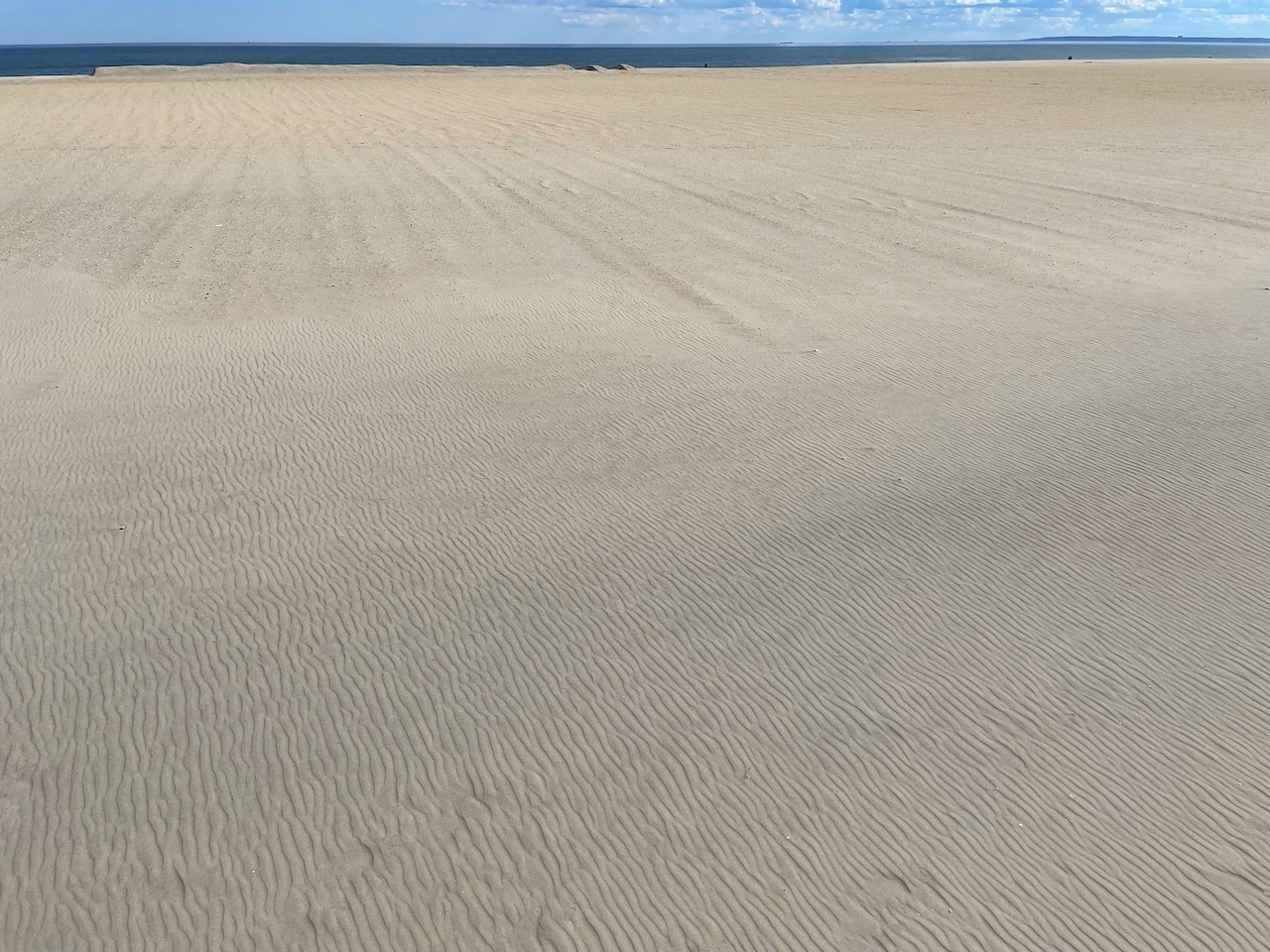
Expanse

Colors of a deserted Rockaway Beach on a warm blustery spring day 

AAR

It's been a spell since I presented at the American Academy of Religion... but this year I'll be there (Denver), and Harawaying!

Friday, April 08, 2022

Splashes of color


Cherry blossoms against backgrounds

Omnibus

In our seminar on Mary-Jane Rubenstein's Pantheologies today, we finally reached the closing section of the book. The section, called "Theos," completes a trajectory begun with "Pan," "Hyle" and "Cosmos," and most of it concerns the debates about Einstein's faith in "Spinoza's God" and how Bohr points beyond it to something more like the pluralist pantheism she's exploring, with cameos from other scientific luminaries, as well as theologians Bonhoeffer and Tillich (with lesser lights fulminating). Very exciting but also very, well, abstract. The little burst in the book's final pages of rich indigenous and womanist insights into interdependence and the divinity of change only accentuates the aridity of what precedes it. 

While several found the book's denouement "epic," discussion really got going when one student reported that reading the book had from the start been an uncomfortably "disembodied" experience for her, and she had come to the conclusion that the author's "personal god" was not hers. Another student told how she'd tried to find out what Rubenstein's beliefs were in an online search and had been frustrated to find almost nothing. I told them this was the sign of a professional scholar of religion, a little different from the understandings of scholarship in the service of art, activism and diversity of voices widespread at our school. I find Pantheologies suffused with a distinctive voice and critical sensibility, but to some of these students it just seemed like discussion of other people's ideas. 

Happily, other students wanted to discuss these ideas - especially Einstein's plaintive "faith in reason" and the kindred desire for a fixed ultimate reality beyond the hurly burly of experience and change. A mystically inclined student spoke of "stillness," and I averred that there was none in the world Rubenstein conjures (unless it's like the stability co-created by the gajillions of symbiotic species of Gaia) and that her ultimately very Jamesian book should make us suspect claims to and for fixed, ultimate, unchanging realities as efforts to stop, order, or step out of our teeming world. This is a hard teaching, and I'm sure we'll be discussing it more in the coming weeks.

But the desire to know Rubenstein's "personal God" generated some interesting discussion too. "Personal God" isn't a term Rubenstein uses (though she discusses and dismissed Tillich's use of it) but came rather from the student's sense that everyone's deepest ideas must be rooted in their bodies, their lives. Others noticed the consistent invocations of feminist, anti-racist and ecological concerns throughout the book, but acknowledged that they didn't get a sense of the author's life. 

I directed the class to a passage which I thought gave a glimpse of the author's lived life which happens also to question the anthropocentrism of "personal" questions. It's in the parentheses of the second long sentence of this 3-sentence paragraph from page 182:

I'm pretty sure, I said, that we're hearing about the non-hypothetical challenge of an ecofeminist's putting up a wood-frame house for her family and dogs and cats and having to decide what to do about a colony of termites in the ground. The "thoughtful deliberation" she menions was real and difficult and necessary in that place and time, and is real and difficult and necessary all the time in different ways. Could we think about Rubenstein's dicussions of James, Spinoza, Bruno, Margulis, Einstein, Bohr and Octavia Butler as resources for doing this in a more sensitive way? The word "omni-personal" typifies the paradoxical task: it's as abstract a term as they come and yet it seeks to name the ongoing reality of a world always more animated, more relational and more locally embodied and co-created than we can ever truly grasp. 

Pantheologies tries to help us clear away the preconceptions - especially the preconception humans are the only persons, and that divinity is likewise "humanoid" - that get in the way of participating in the world. It doesn't supply the termites; they're already there. It also doesn't tell us how to negotiate coexistence with them, but it makes us more likely to recognize their claim on existence, their co-responsibility for sustaining the world we share, and to try to find ways of thriving together. A book can't make us embodied (any more than the many books that try to make us disembodied can do that) but it can help us realize we are embodied, and this book (for which embodied also means divinely entangled) does that, no?

My presentiment of divinity (let's say that instead of "personal God") is also not Rubenstein's. I find her delight in "holographic" perspectivalism and her emphasis on the fearful as well as grateful affects of wonder off-putting and hard to reconcile with the stupendous symbiosis of Gaia. But that seems less significant than a shared resonance with the open-ended pluralism we both learn from James and recognize in the figures and narratives of traditions from around the world, though I don't see them in all the places she does - and of course James still relies on a humanoid understanding of persons, too. As ever in the pantheistic mutivers there is work to do!

Monday, April 04, 2022

Brava

On a good day, America looks like this: soon to be Supreme Court Justice Ketanji Brown Jackson!

Sukkah punch

Had occasion to revisit an event from twelve years ago in "Religion and Ecology" today. Our general topic for today's session was Jewish environmentalisms. I've been trying to get the students to think both religion and ecology in more practice- and less belief-defined ways, so I remembered the "Sukkah City" competition in Fall 2010 when a dozen new takes on the ceremonial "booths" for the Sukkot holiday were erected on Union Square. (This is a picture I took then of my favorite, made entirely of carpenters' shims.) Several students remembered sukkahs from their childhoods but for most it was an exciting new discovery: a temporary religious structure designed to let starlight in, to which one moves as much of one's life as one can for a whole week each year? How might having this as part of your life shape your understanding of vulnerability, nature, community, time?

Sunday, April 03, 2022

Still

Against apathy

I realize that I've been neglecting this blog for the past month, indeed for longer. It's the assault on Ukraine, of course, which appals with its brutality and, with each new report, with its sense that the happy illusion of an end of history was just that. Wars of aggression still happen. Civilians are still targeted. And the strong expect to get away with it, supported or condoned in their brutality by too many people for too many reasons. There's a related terror, too, that what the people of Ukraine are so bravely resisting will broaden in scope, that wider war will happen, that nuclear weapons will be used. 

A visiting German friend put it this way: 
Don't Americans realize that everything's changed? 

My daily routines have not changed, though, with their little dramas and comedies, their frustrations and satisfactions, their discoveries and disappointments. Chronicling these for whatever sense of emerging or lasting significance a blog conveys just seems wrong. I'll try to persist, if only not to give into despair, the apathy that theologian Jürgen Moltmann says is the sin of the powerless...

Friday, April 01, 2022

Enter green