Sunday, June 27, 2021

Learning by doing

Started my Renmin University of China International Summer School course today - Monday morning 8am for the students, Sunday 5pm for me in California. There are 50 students in the class, too many to see or engage through a zoom/voov gallery, so after introducing my 

Deweyan pedagogy, we divided them into six groups my teaching assistant had set up. I'll be meeting with each group twice in later sessions, but for today I wanted to make a personal connection to them - and for them to connect to each other. Learning by doing!

The results were grand. I'd told them that Deweyan teaching offers not rote answers but problems which provide occasions for thinking, and each group's answers to the prompts were indeed thoughtful - and different enough from the others that I shared all with the class.

(This is a digest I'll bring up at the start of the next class in two days.) Aren't we lucky to have each other, I mused, to think together about the challenges we face... We went on to consider definitions of the humanities, ecological/environmental humanities and - our topic - 

"Anthropocene Humanities," but I hope the pluralizing opener, engaging their words and ideas before introducing authoritative ones, made the issues real to them, as well as my commitment to our shared endeavor. Online isn't great, but we're off to a good start.

Pride

In a dry dry year the scarlet larkspur stands out even more.

Saturday, June 26, 2021

California coral?

Instead of grousing about the traffic as we returned from our foray to the California central coast, here's a picture of something I found in a 

tide pool at Montaña de Oro. Don't ask me what it is (though I suppose I'm asking you): I don't even know if it's animal, vegetable or mineral!

Friday, June 25, 2021

Land art

Surf-cracked miguelito shale at Montaña de Oro State Park
Like stumbling on the remains of a giant stone library

Thursday, June 24, 2021

On Indian land

We're staying a few days at an Airbnb in Lompoc, not a place I've been before or know anything about. Our host, a retired local high school teacher, filled us in on some its history, and directed us to a mute memorial to the destruction of most of its first peoples, the Chumash. The Franciscan Purisima Concepcion mission was built here in the 1780s, rebuilt after an earthquake in 1812. Secularized in the 1830s and gradually abandoned, it was reconstructed by  
the CCC in the 1930s. It's now run as a State Park, and its museum tells a truer tale of the colonial destruction of indigenous worlds in "Old California" than most of the missions. It still struggles against the romantic myth of the missions, though; if you didn't read to the end of the interpretive panels, like these below, you might not notice how everything ended in death for Chumash culture - and people.
I grew up - in San Diego, site of the first of the 21 Alta California missions - with a sanitized version of the story, Junipero Serra an at once gentle and heroic precursor to to my own presence as a European settler in this land. It is heart-rending to confront the reality... especially on a day when hundreds more First Peoples graves have been found near a residential school in Canada, all part of the same genocidal program to "Kill the Indian, Save the Man." 
The town of Lompoc has sponsored many public murals, one of which celebrated the old story, conjuring up the 1787 original mission with converts, heads bowed, around a cross. On the empty lot in front of it, someone, perhaps Chumash, has erected a statue, mourning.

Wednesday, June 23, 2021

Central California coast

Taking a little trip before returning to teaching...

Tuesday, June 22, 2021

Rush of color

   Green wave

Monday, June 21, 2021

Points of light

Plenty going on despite the drought ...

Sunday, June 20, 2021

Breaking the fourth wall

At the end of the exchange of the peace today, the congregation assembled for a second week at the Church of the Holy Apostles turned back to greet those of us watching the livestream. (The camera's in the old choir loft.) It's something I'd recommended, but it still moved me more than I expected. Absurdly, perhaps, I felt seen!

Saturday, June 19, 2021

Happy Juneteenth!

Friday, June 18, 2021

Intrepid lanceleaf dudleyas stand out among the dry scrub

Thursday, June 17, 2021

Blazing

Several heat records have been broken this week, and this in an American West by all indications suffering a thousand-year mega drought. And it's only mid-June!

Wednesday, June 16, 2021

Global pandemic

Astronomical numbers (probably underreported) but this isn't over.

Tuesday, June 15, 2021

Time warp


Returning to my childhood home Del Mar not after the usual half year but after a year and a half - including a year when time in many ways seemed to stand still - is a little uncanny.


Add that today is California's official reopening - even as the nation crosses the threshold of six hundred thousand souls lost to covid - and nobody's wearing a mask.


Cyclical and linear time tangle and knot.

Monday, June 14, 2021

In the clouds

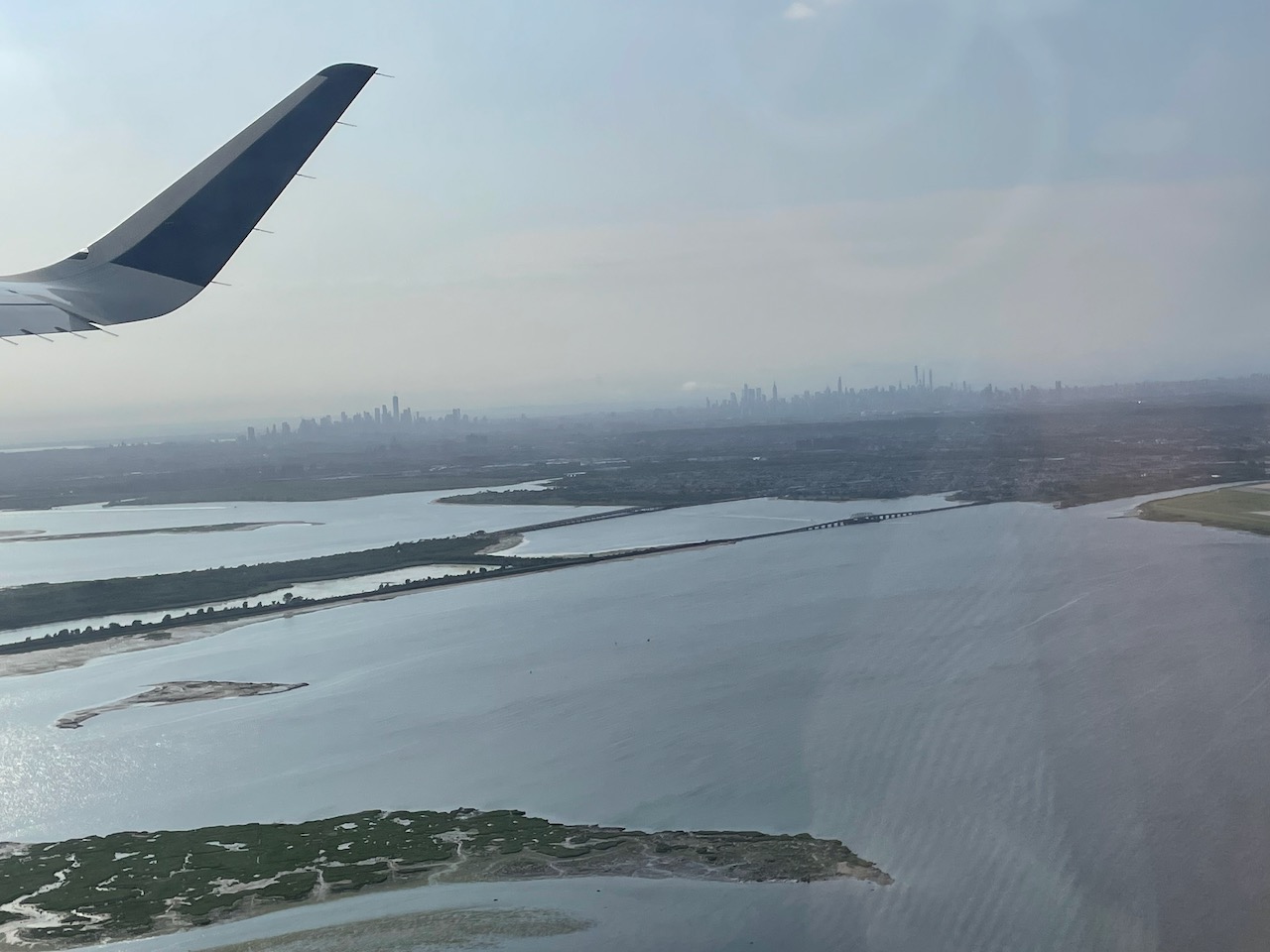
I flew in a plane today - the first time in 515 days! It was the familiar route from JFK to San Diego, though we flew farther south than in this map... and it wasn't as clear.


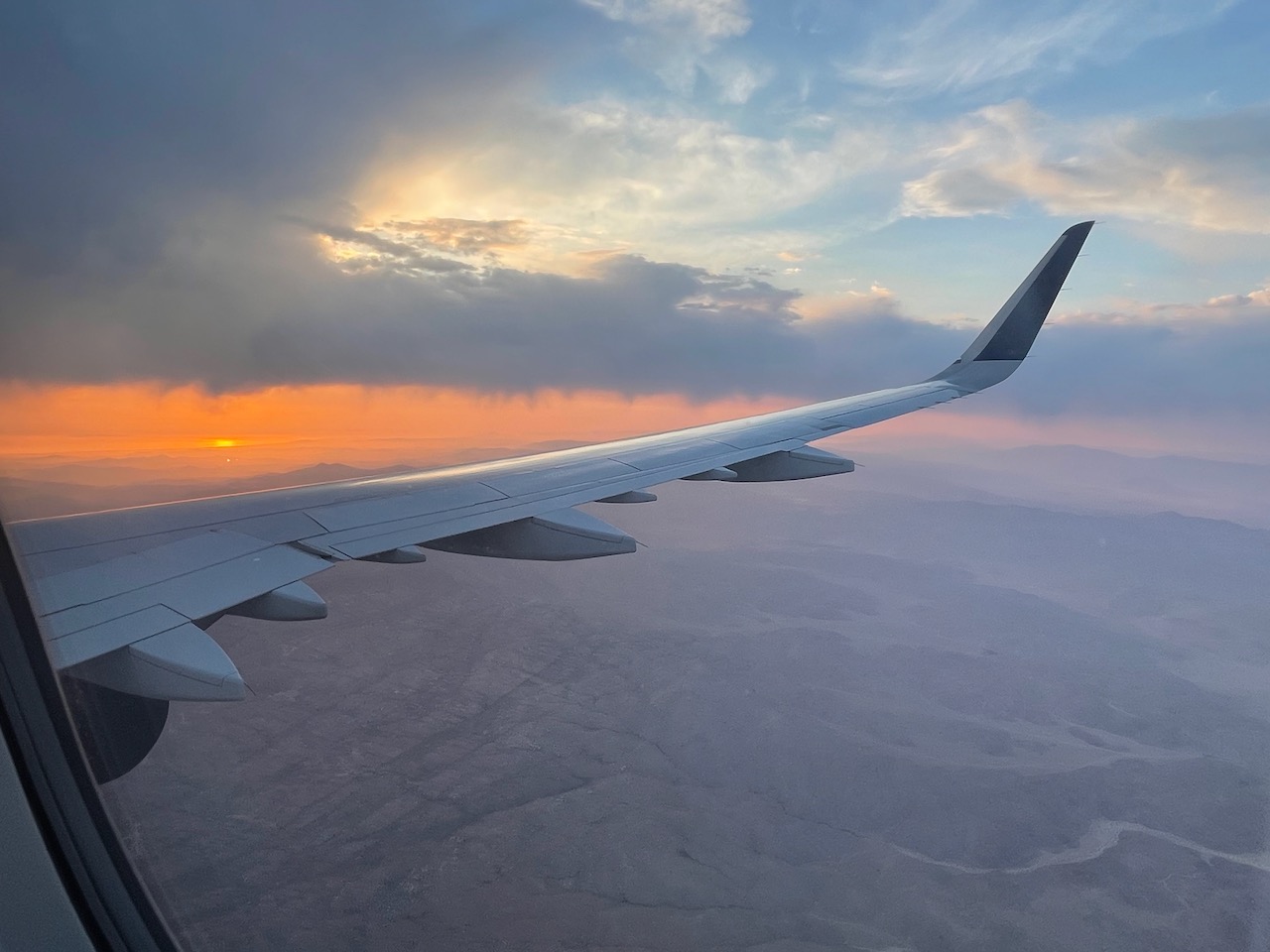
After marveling at New York's ever spikier skyline I was excited to see the land, especially in the West, but was treated instead to clouds of every shape. (We flew the southerly route because of storm systems we could see out the northerly window.) These time lapse videos 

(make sure to click the little box at lower right to get full-screen) make the ride seem a little bumpier than it was, but capture some of the Dr. Seuss-like wonders over West Virginia, and the almost sci-fi landscapes over New Mexico, where clouds - some tinted brown 


and even baby blue by heat and smoke - masked the land baking in a heat wave below. At times it felt more like Jupiter than Earth! We were following the sun all day, and got to see it reflected in the Pacific from behind the clouds on final approach to San Diego.

Sunday, June 13, 2021

Grand prospect

Nobody imagined it would be fifteen months, but here we were, our congregation gathered again for socially distanced but in person worship. Even the hydrangeas in the church garden were celebrating. 

Like other "returns to normal" there were more feelings than one could keep track of, but the event kept one too busy to worry about that. Who knew that singing in a mask fogs your glasses - though my glasses would have fogged anyway from the emotion of hearing voices all around once again, and in four part harmony no less! But I have to tell you about the sermon by our indispensable rector - she who prepared us so wisely for the sacrifices ahead at our last service together, March 15th of last year, and at more zoom gatherings than anyone anticipated in the meantime.

She had recently traveled to see her son who lives in Arizona, and she'd been to see the Grand Canyon for the first time. Some had counseled against going - it's just a view you can see in pictures, they said - but she's glad she went. Words failed, of course. Some say they feel eternity there, she told us, something vastly older than we are which will be the same long long after we have passed on, and it is indeed very old. There are layers going back billions of years, sometimes with unexplained gaps. But it's also always changing and always has been. A sublime experience, quickened when she noticed words someone had written on the stand of a defunct viewing scope: you are loved. She didn't know who wrote them or why but in the face of the vastness of deep time and change, these words resonated.

The sermon worked through some other things, including the day's gospel - Mark 4:26-34, the famous parable of the mustard seed and the parable preceding it: The kingdom of God is as if someone would scatter seed on the ground, and would sleep and rise night and day, and the seed would sprout and grow, he does not know how. The earth produces of itself, first the stalk, then the head, then the full grain in the head.... The kingdom isn't a destination but the present, ever transforming and grace-filled, as the Colorado River carves the Grand Canyon. But, she said (I'm mangling her fluent narrative), here we are. And standing in the pulpit looking out at our reunited congregation was, she said, like beholding the Grand Canyon.

I haven't done the sermon justice [you can listen to it here, starting about 22 minutes in], but I hope to to have conveyed some of the wow of that moment, as we experienced sharing a grand 3-dimensional space again, after an epic-seeming period of nameless change and loss, a yawning gulf of time, everything now familiar and yet, we at some profound level know, nothing the same. Amen.

Saturday, June 12, 2021

豆腐図書館

A visit to our local H-Mart today reminded me of my delight at a particularly felicitous turn of phrase in a recent Times article on Asian supermarkets like this one. (In fact the article starts in this very branch on W. 110th St.) 
The phrase: 

library
of tofu

Friday, June 11, 2021

Not my party

 I've finalized the syllabus for the course I'll be teaching for Renmin's Online International Summer School in a few weeks - a new one. Being online will be a new challenge in this context, too. I will not be lecturing for 3.5 hours each day, I can tell you that! But how to get students working in smaller groups, and to get to know them, remains to be worked out. 

It's a different class than the one I taught there twice before, and I'm realizing it may also involve some awkward questions. This is not just because the Anthropocene, as I understand it, is largely a story of the materialist culture of the anglocene ruining things for everyone, but because the Summer School starts just as the celebrations of the centenary of the Chinese Community Party reach their apex on July 1st. The "our civilization is already dead" epiphany of Roy Scranton, whose essays have put the Anthropocene on the American map, will sound a little different in this setting. 

Of course it's dead, I'm imagining a propaganda-primed student saying, but that's just your civilization. Our 生态文明 ("ecological civilization") will bury you. 

I don't really want to get into the ways Chinese culture has its own patterns of anthropogenic ecological disruption, or the appeal and pitfalls of what folks in the biz call "eco-authoritarianism," so will be focusing on the role of the humanities in any ecological project: pluralizing, historicizing, motivating, humanizing - and, as we recognize our bonds to our other earthling kin, posthumanizing. Renmin is a social sciences and policy-focused place, so talking up humanities is part of my brief, and I'll be happy to stick to it.

I'm hoping the wise perspective of historian Julia Adeney Thomas, which we'll read for the second session, will provide a platform for constructive discussion sans politics. Thomas, who has offered Neoconfucian Tokugawa Japan as a model for an ecological civilization, indicts all the regnant narratives for lacking seriousness about the "diminished hopes" which must inform our thinking about the human prospect, endorsing two others: a galvanizing "singular story" at the global level, informed by science and implemented by a kind of "benevelont totalitarianism," and a "democracy of voices" at the local level, championing local knowledge and ingenuity. A big enough umbrella for us all? Let a thousand flowers bloom!

Thursday, June 10, 2021

Go with the flows

Read a fun recent article today by comparative historian Prasenjit Duara called "Oceans as the Paradigm of History." It argues that

Historical processes are not fundamentally tunneled, channeled or directed by national, civilizational or even societal boundaries but are circulatory and global, much like oceanic currents. (2)

Most historical storytelling narrates in linear terms within the logic and ever contested boundaries of nation states, but that's not how human history actually works - or how it participates in the broader history of life. Letting the ocean serve as the paradigm of history (how time flows, how change happens) opens many possibilities - and, of course, isn't just a metaphor. The Gulf Stream and the Monsoon, for instance, have shaped human history in all sorts of ways. Duara argues also that it is in water - especially in the oceans - that humanity has experienced the cycles of time, and how to live within them. 

For the vast span of history, humans have largely avoided interfering with such powerful natural forces as the ocean, which they considered to be beyond their ability to control or manipulate. ... Historically, cosmologies generated modalities of managing such forces, including the idea of maintaining an accord or adapting to natural energy flows, developing and manipulating them rather than the ambition to acquire full mastery over them. Rituals performed on a routine basis or to avert cataclysmic events sought ultimately to appease the forces of nature. The myth of the deluge as a foundational element can be found in almost every ancient culture. These beliefs, ideas and practices should be understood as experientially grasping some fundamental dimension of the human relationship with the natural world that is missing or misunderstood in the modern historiographical vision. (16)

Duara has reflected on these questions and processes for many years, but here is agitated by the way human beings are increasingly affecting the oceans, deliberately and unwittingly, in territorial claims and mining and pollution, etc. To counter this, and vindicate the ocean as a better model for understanding the "human relationshup with the natural world," he invites us to consider how the ocean is different from terrestrial imaginings. Unlike land or even rivers, oceanic currents don't just flow but cycle. Temperature and salinity but also the topography of shore and ocean bed affect them, as do wind and weather - and of course all of these are interdependent relationships. 

But ocean currents occur simultaneously also at multiple dramatically different but interacting levels. Currents include surface eddies (see above), but also deep currents (see below) which complete their slow circuit roughly every thousand years (wow!). Imagine understanding the way events unfold in these terms! (He gives some interesting examples from the circulation of ideas.) But there's more: we're talking a three-dimensional space, not the flattening illusion of terrestrial two dimensions, and everything interpenetrates. There are no boundaries as (apparently) on land, but a vast shared reality. We might be able to learn from cetaceans, who track multiple spaces all the time; sound travels four times as fast in water as in air.

Ancient cultures can't have known all of this but they knew enough to understand cycles, and that you have to learn to accommodate them. This is something Duara thinks moderns and our historians have forgotten, committed as we are to unsustainable linear ideas of growth. But in the Vedas, in Buddhist ideas of "dependent arising" and of course in Daoism there's something like an oceanic understanding of things which we could sorely use to break the hold of the ways of living which produced the Anthropocene. The more reason to protect the oceans from despoliation, not only as a reality - we can't live without them, and their "revenge" at our unsustainable ways is already devastating - but as an idea, too, a paradigm for the way of the world.

Is there still a way to reconcile the creative capacities of humans with the limits of nature? Can we develop collaborative and imaginative ways to identify scalar transformations and potential counter-finalities to move us in a more sustainable direction? The re-direction of historiographical knowledge to accord better with the nature of historical time and the sovereign planet could mark a step towards it. (21)

Wednesday, June 09, 2021

Two party system

That's Grant's tomb on the left